Global wind energy has entered a phase of unprecedented scale and maturity. By the end of 2023, total installed wind power capacity worldwide exceeded 1,021 GW, and record-breaking installations in 2024 confirmed wind energy as one of the fastest-growing pillars of the global energy transition, according to the latest data published by the Global Wind Energy Council (GWEC) in its official reports. As we move through 2026, understanding the difference between offshore and onshore wind farms is no longer optional: it is essential for developers, investors, and businesses planning resilient and competitive renewable energy projects.
Onshore wind energy and offshore wind energy have similarities and differences. Their share of total energy production is steadily rising, with wind power capacity expected to increase significantly in the next years. At Crosby Airpes we have been helping to build wind farms, both on land and at sea, for almost 20 years. This comprehensive guide examines the critical distinctions and challenges involved in working in each environment.
Onshore and offshore wind energy: growing markets
Did you know that the average power produced by an onshore wind turbine is between 6 and 7 MW, while offshore wind turbines can reach 15 MW or more?
This difference is due to the environment in which the wind farms are located. The offshore wind’s speed is higher as there are no natural barriers to stop it, which allows the wind turbines to be bigger.
Still, the main difference between onshore and offshore energy is their uneven market penetration and the unique challenges each environment presents.
The critical difference between offshore and onshore wind energy
While both technologies convert wind into electricity using similar principles, the difference between offshore and onshore wind farms extends across multiple dimensions that significantly impact project planning and execution.
1. Wind resource quality and energy production
Offshore wind energy benefits from superior wind conditions due to the characteristics of the marine environment. Over open sea, wind flows are stronger, more stable, and less turbulent because there are no physical obstacles such as buildings, vegetation, or terrain irregularities. As a result, offshore wind speeds are typically 20–30% higher than those on land, allowing turbines to operate more consistently and achieve capacity factors of 45–55%, significantly higher than their onshore counterparts.
Onshore wind energy, by contrast, is more influenced by local geography and surface conditions. Wind patterns on land vary depending on terrain elevation, vegetation density, and nearby infrastructure, which can reduce wind speed and increase turbulence. However, this variability does not necessarily limit performance. Strategic site selection in high-wind corridors, combined with modern turbine technology and taller towers, enables onshore wind farms to reach competitive capacity factors of 25–35% and deliver reliable energy production at a lower overall cost.
2. Installation complexity and specialized equipment
The installation phase is one of the most critical operational differences between onshore and offshore wind energy projects, as each environment imposes distinct technical, logistical, and safety challenges.
Offshore wind installations demand an exceptionally high level of engineering precision and coordination. Turbine foundations must be installed in marine environments using specialized vessels, while large components such as towers, nacelles, and blades are transported and assembled at sea under strict weather constraints. Installation windows are often limited by wind, wave height, and sea conditions, making every lifting operation highly sensitive to environmental factors. One of the most complex tasks is positioning the nacelle on top of the tower, where even minor movements caused by waves or wind can compromise safety and alignment.
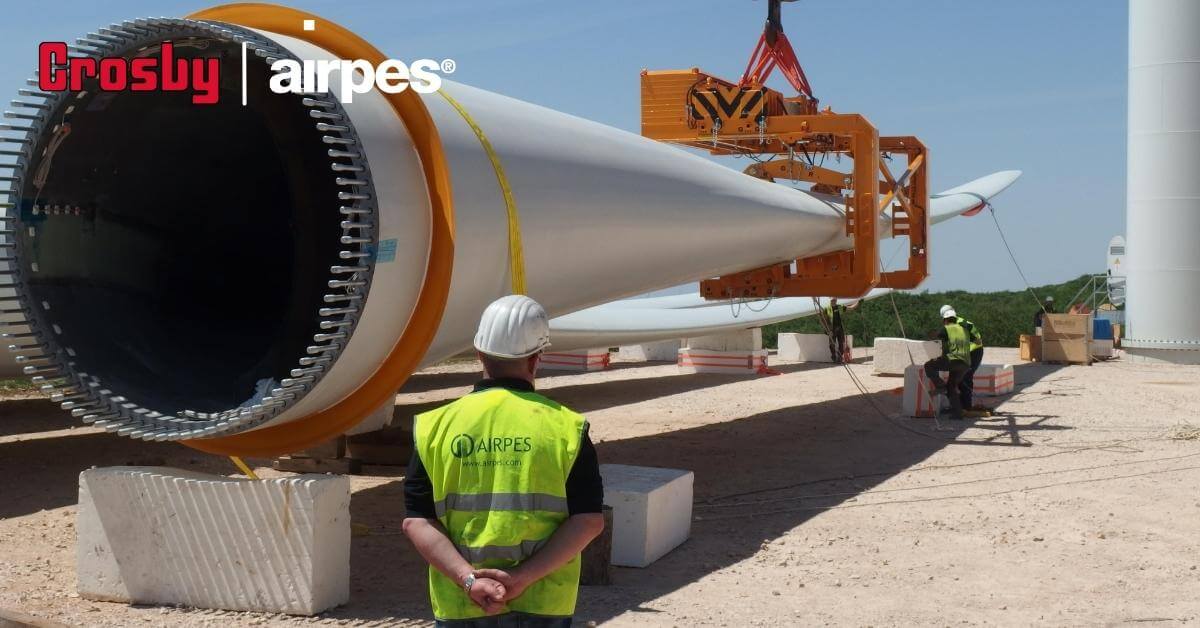
To address these challenges, Crosby Airpes has developed purpose-built offshore lifting solutions, including advanced offshore nacelle lifting systems engineered to compensate for vessel motion and the dynamic conditions of marine installation. These systems are specifically designed to ensure safe and precise nacelle positioning in offshore environments, where installation accuracy directly impacts project timelines, safety standards, and overall cost efficiency.
Onshore wind installations, while more accessible, present a different set of technical requirements. Projects must account for crane mobilization, road and site access for oversized components, and terrain-specific rigging strategies. Logistical constraints such as narrow roads, steep gradients, or remote locations can significantly increase installation time and operational costs if not properly planned.
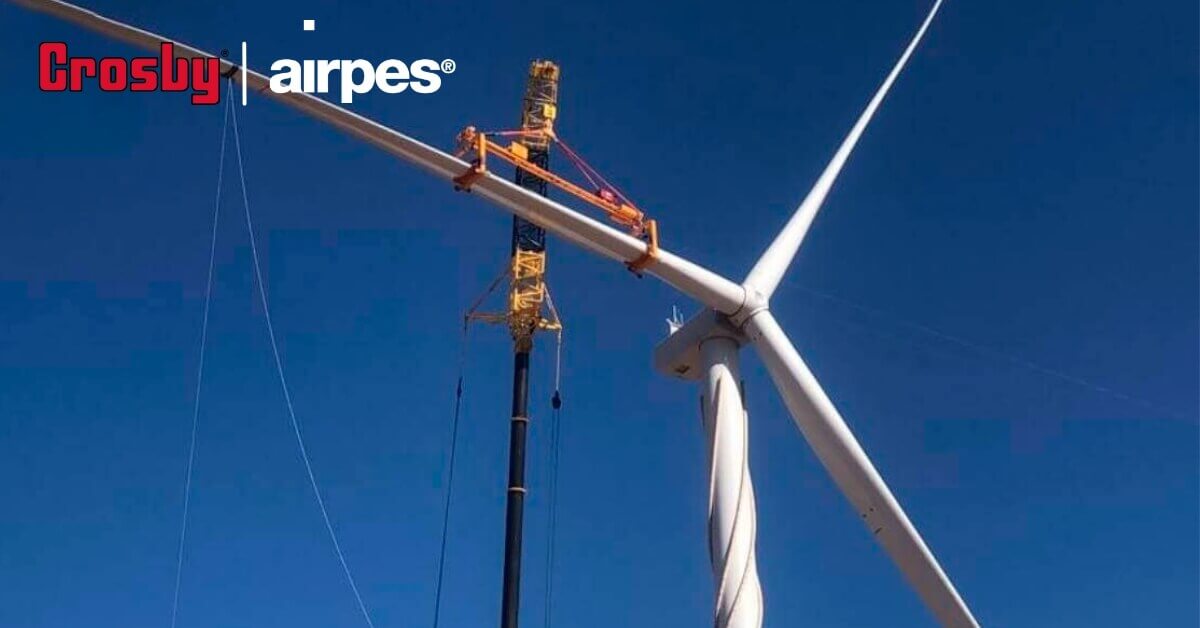
Innovative engineering plays a key role in overcoming these limitations. Crosby Airpes’ Craneless Wind Turbine Rotor Blade Exchange System addresses one of the most critical onshore challenges: the need to mobilize large cranes for routine blade replacement operations. By enabling rotor blade exchange without crane mobilization, this system significantly reduces downtime, lowers maintenance costs, and improves long-term operational efficiency.
3. Economic considerations: cost analysis
The Levelized Cost of Energy (LCOE) provides the most accurate economic comparison between onshore and offshore wind energy.
Current LCOE ranges (2024-2025 data, indicative global averages):
- Onshore wind: $30-50 per MWh – one of the least expensive forms of renewable energy
- Offshore wind: $60-100 per MWh – higher costs justified by superior energy production
Despite higher costs, offshore wind’s superior capacity factors often justify the investment for large-scale projects. Onshore wind remains more cost-effective, with cheaper infrastructure and operational costs that help lower electricity bills for end users.
Offshore wind farms: the challenge of working at sea
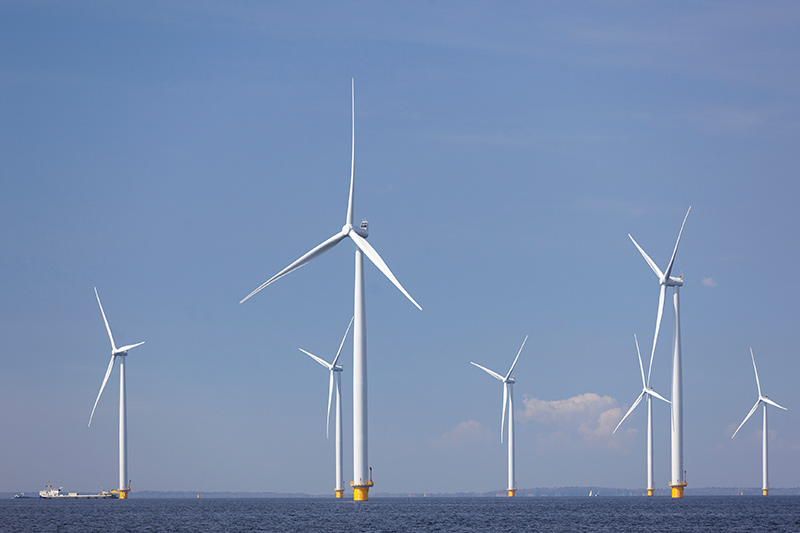
Offshore wind farms are mega-structures built at an average distance of 41 kilometers from the coast and settled at an average depth of 27.5 meters (source: WindEurope).
This means several engineering challenges: How are the wind turbine parts transported to the wind farm? How is the nacelle placed on the tower? And how are the blades assembled?
Offshore wind turbines are more efficient due to higher wind speeds and consistency. Being miles from the coast, offshore turbines reduce visual impact and may even help protect marine ecosystems through artificial reef effects.
Offshore installations face unique challenges:
- Higher installation and maintenance costs
- Weather-dependent access (40-60% annual accessibility)
- Corrosion management in marine environments
- Complex subsea cable infrastructure
- Specialized marine vessels required
Having the right lifting equipment is essential for the success of the project. For example, one of the biggest challenges is placing the nacelle on the tower. Weather conditions at sea can be complicated: waves, wind, etc. That is why precision is vital.
Look at how we designed, tested, and implemented a specific lifting system for these situations: Handling and transport of nacelles in WTG Towers.
Onshore wind farms: the challenge of facing gravity
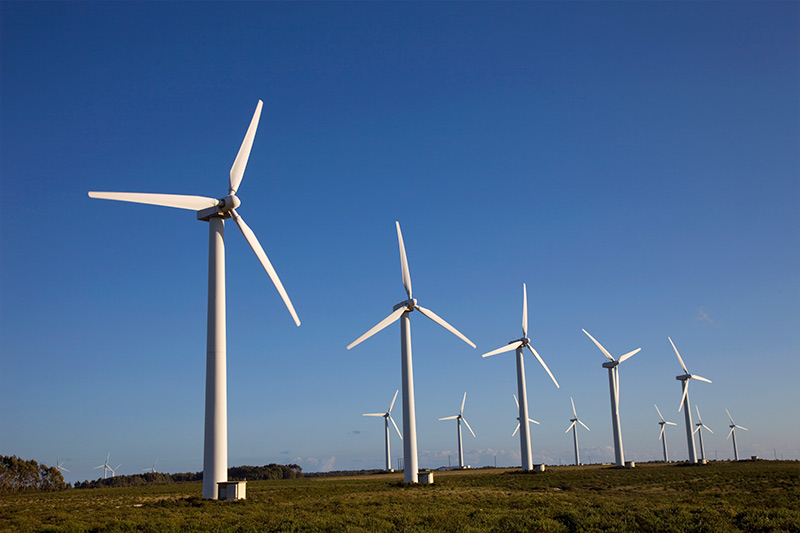
An average onshore wind turbine produces around 2.5 to 3 megawatts (MW) compared to offshore turbines that can reach 8-15 MW. However, onshore wind farms account for more than 90% of the world’s installed wind energy capacity due to the sheer number of installations globally.
This dominance stems from several factors: onshore wind has been commercially deployed since the 1980s (compared to offshore’s commercial start around 2000), installation costs are significantly lower, and development timelines are faster. With over 920 GW of onshore capacity installed worldwide versus approximately 100 GW offshore, the volume of onshore equipment makes maintenance and operational efficiency vitally important for global energy production.
Advantages of onshore wind power:
- Reduced environmental impact: Construction and operation create significantly less emissions than other energy sources, while sites can still be farmed
- Cost-effective: One of the least expensive forms of renewable energy, helping lower electricity bills
- Quicker installation and easier maintenance: Onshore wind farms can be constructed in months and are relatively inexpensive to maintain compared to offshore
- Year-round accessibility: Direct road access enables faster response times and easier component replacement
Setting up an onshore wind farm presents many challenges. Some of the most important are:
- Adapting the construction to the orography
- Transportation logistics for large components
- Balancing visual impact with community acceptance
- Managing bird and bat collision risks
For example, it isn’t profitable to assemble a crane every time the blade of a nacelle has to be changed. For this reason, at Crosby Airpes, we designed a system that allows the blades to be replaced without a crane: Crosby Airpes’ Craneless Wind Turbine Rotor Blade Exchange System.
Comprehensive comparison: onshore and offshore wind energy
The following comparison is based on 2024-2025 industry data from GWEC, IRENA, and NREL. These figures represent current market averages and may vary by project location and technology. Offshore wind technology is evolving rapidly, with costs and capacities subject to change.
| Factor | Onshore Wind Energy | Offshore Wind Energy |
| Average Turbine Capacity | 3.4-5.5 MW | 8-15 MW (up to 18 MW) |
| Capacity Factor | 33-39% | 50-60% |
| Installation Cost (per kW) | $1,400-1,800 | $2,500-4,500 |
| LCOE (per MWh) | $34-49 | $79-100 |
| Installation Timeframe | 6-12 months | 18-36 months |
| Maintenance Accessibility | Year-round, easy access | Weather-dependent, limited access |
| Visual Impact | Moderate to high | Minimal (10+ km offshore) |
| Land/Sea Use | Compatible with agriculture | Compatible with fishing |
| Environmental Considerations | Bird/bat impact, noise | Marine ecosystem effects |
| Market Share (2024) | 93% (~1,053 GW) | 7% (~79-83 GW) |
Frequently Asked Questions about onshore and offshore wind farms
Neither technology is universally “better”, each excels in different contexts. Offshore wind energy delivers superior capacity factors and energy production per turbine, making it ideal for large-scale projects where land is scarce and higher upfront costs are justified by long-term performance. Onshore wind energy offers more cost-effective deployment, faster installation timelines, and easier maintenance accessibility, making it optimal for projects prioritizing lower costs and rapid development. The best choice depends on your specific project requirements, available resources, and long-term energy goals.
Inshore winds refer to wind patterns occurring near coastlines but over land, while offshore winds blow across ocean waters. The key distinction lies in wind characteristics: offshore winds are typically 20-30% stronger and more consistent due to reduced surface friction and fewer obstructions. Ocean surfaces create smoother airflow compared to land terrain, resulting in higher average wind speeds and more predictable generation patterns. This fundamental difference makes offshore locations highly valuable for wind energy development despite higher installation and maintenance costs.
Offshore wind faces several significant challenges. Installation costs run 2-3 times higher than onshore projects due to specialized marine vessels, complex foundations, and subsea cabling. Maintenance proves more difficult and expensive, with weather-dependent access limiting technician visits to 40-60% of the year. Marine environments accelerate corrosion, requiring premium materials and protective systems. Grid connection requires costly subsea cables extending tens of kilometers. Permitting processes are more complex, involving multiple marine authorities and stakeholder groups. Despite these challenges, superior energy production often justifies the additional investment for large-scale developments.
Onshore wind projects face distinct operational and environmental risks. Visual and noise impacts can create community opposition, particularly in scenic or residential areas, potentially delaying or blocking development. Bird and bat collision risks require careful site selection and mitigation measures. Weather events like lightning strikes, ice accumulation, and extreme winds can damage equipment. Transportation logistics for increasingly large components face road infrastructure limitations. Land use conflicts may arise with agriculture, recreation, or development interests. Proper planning, community engagement, and technical solutions (including advanced lifting equipment that ensures precise installation) help mitigate these risks effectively.
Industry trends and market growth
The wind energy sector is experiencing unprecedented expansion, with both onshore and offshore wind energy playing complementary roles in the global energy transition.
According to GWEC forecasts, the wind industry is expected to install 680 GW of new capacity between 2024 and 2028. Offshore wind is projected to grow at a 20% compound annual growth rate, while onshore wind maintains steady 8-10% annual growth.
Emerging markets: The United States is rapidly developing its offshore wind sector, with 30+ GW in active development along the Atlantic coast. Asian markets, particularly Japan, South Korea, Taiwan, and Vietnam, are accelerating deployments. Latin America, Africa, and Southeast Asia are experiencing significant onshore wind expansion.
Technology integration: Wind energy increasingly functions within hybrid renewable systems, combining with solar PV, battery storage, and green hydrogen production to create firm, dispatchable clean energy.
Conclusion: embracing both technologies for a sustainable future
The debate over onshore and offshore wind farms isn’t about choosing a winner: it’s about understanding how both technologies complement each other in building a sustainable energy future. As we’ve explored, the difference between offshore and onshore wind energy extends across technical, economic, environmental, and operational dimensions.
Onshore wind continues to provide cost-effective, proven renewable energy generation with straightforward deployment and maintenance. Offshore wind offers superior wind resources and massive scaling potential, justifying higher investment through exceptional long-term performance.
Crosby Airpes: your partner in wind energy projects
Setting up a wind farm is not an easy task, both onshore or offshore, but with the proper travel companions, it can be made easier.
Since 2003, Crosby Airpes has specialized in lifting solutions for the wind industry. Each client has specific needs: the wind farm’s geographical location, the equipment’s characteristics, etc., that make each project different. This has led us, for example, to develop different ways of assembling the blades of wind turbines.
Our solutions for both environments
For offshore projects:
- Marine-grade nacelle lifting systems designed to handle vessel motion and wave action
- Specialized component handling equipment for challenging marine conditions
- Solutions deployed on major offshore projects across Europe and Asia
For onshore projects:
- Blade installation and rotation tools for safe, efficient assembly
- Revolutionary craneless blade exchange systems reducing operational costs by up to 60%
- Tower assembly solutions adapted to diverse terrain conditions
At Crosby Airpes, we have extensive experience in the engineering of lifting systems and are prepared to help your company in the wind energy sector. Whether you’re installing onshore turbines or deploying offshore giants, we provide the specialized equipment and expertise your project demands.