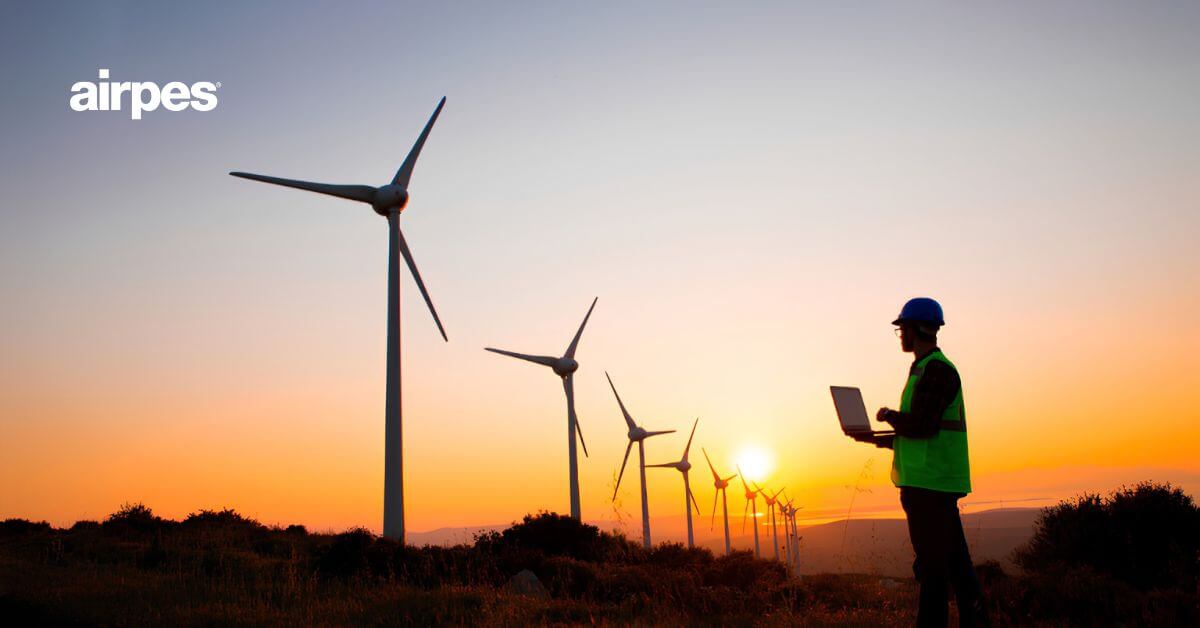
Wind turbines are installed in a fixed sequence: foundation, tower erection in sections, nacelle placement and blade installation, followed by electrical connection and commissioning. Each stage depends on lifting equipment (ranes, lifting beams and blade yokes) sized to the turbine’s weight and height, which is what really limits how fast a project moves.
1-minute summary:Wind turbine installation is the on-site process of erecting a turbine’s tower, nacelle and rotor blades and connecting them into a working power-generating unit, typically using mobile or crawler cranes sized to the component weights involved. Airpes designs, manufactures and supplies the below-the-hook lifting equipment (custom lifting beams, blade yokes, clamp tools and crane-less blade exchange systems) that installation and O&M teams use to erect, maintain and repower onshore and offshore wind turbines safely, to EN 13155 and ASME B30.20 standards.
What does wind turbine installation actually involve?
Wind turbine installation covers everything that happens on site after the components arrive: erecting the foundation and tower, placing the nacelle, attaching the rotor blades, and connecting the electrical systems before commissioning. It’s a distinct phase from manufacturing and factory assembly, though the two terms are often used loosely.
A single onshore turbine can now weigh several hundred tonnes and stand well over 150 metres to the blade tip, so installation is fundamentally a heavy-lifting engineering problem before it’s a construction one. Offshore projects add a further layer: foundations driven into the seabed, specialised vessels, and a shorter weather window to work in.
What happens before the crane arrives?
Before any lifting starts, developers run a site study that typically spans several months: measuring wind speed and direction, surveying terrain and soil, checking accessibility for abnormal loads, and reviewing weather patterns that could affect the schedule.
Foundation work follows. Onshore, this usually means a reinforced concrete base that needs roughly two weeks to cure before it can bear the tower’s load. Offshore, it means driving a monopile or jacket foundation into the seabed with specialised vessels.
You might also be interested in: Difference between onshore and offshore wind farms
How is the tower installed?
A wind turbine tower is never lifted in one piece. Because of its height, it’s fabricated in sections (at the factory or nearby) and bolted together on site using cranes with capacities matched to each section’s weight.
The tower stays horizontal until the sections are joined, then a high-capacity crane raises it into a vertical position, section by section, torquing the bolted flange connections at each stage. Terrain, crane wind-speed limits and section size all affect how long this takes.
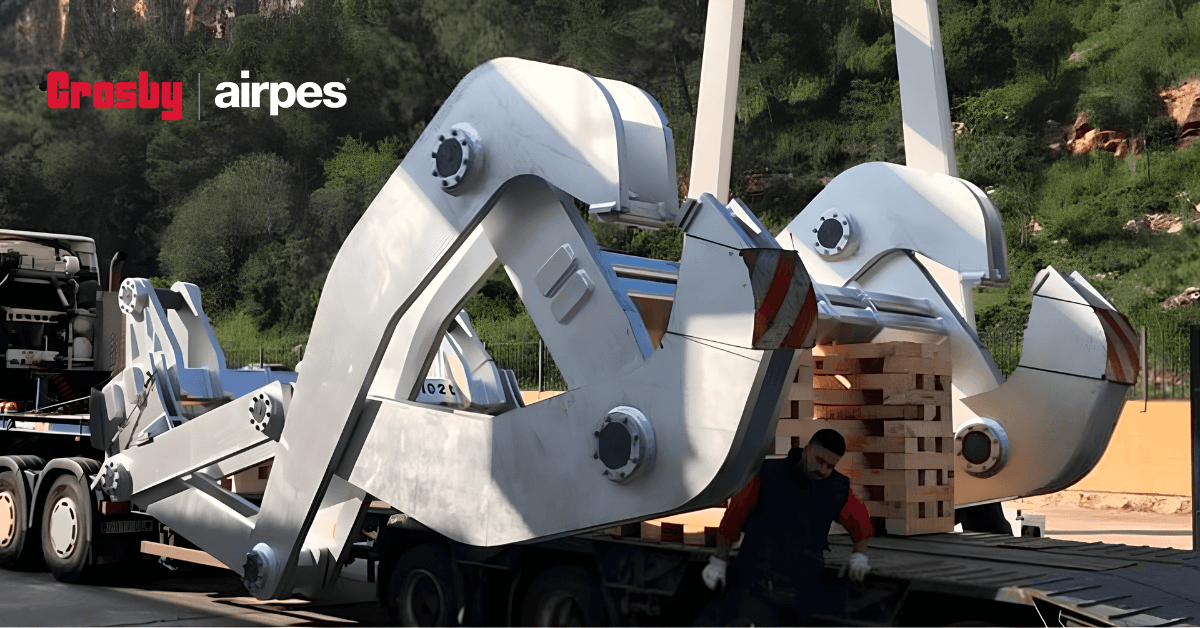
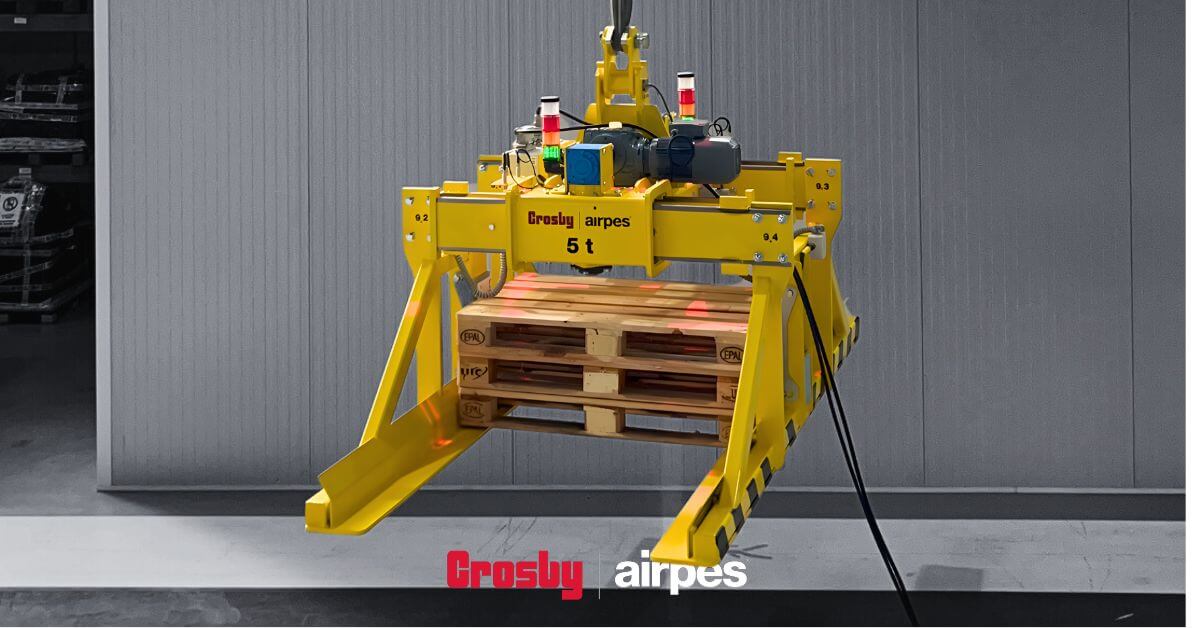
Below-the-hook devices, lifting beams and slings rated for the specific section weight and lifting geometry, are what actually connect the crane hook to the tower section. Undersized or generic rigging is one of the most common causes of delay at this stage.
How is the nacelle installed?
The nacelle houses the gearbox, generator, main shaft and yaw system, and its weight is rarely centred, which is what makes lifting it correctly difficult. A nacelle lifting beam is engineered specifically to keep the nacelle level in the air despite this off-centre load, protecting both the component and the crew working below.
Once assembled and tested, the nacelle is lifted onto the finished tower and bolted into place. It can rotate a full 360° to orient itself into the wind once commissioned.
You might also be interested in: What are the five principal wind turbine parts?
How are the blades installed?
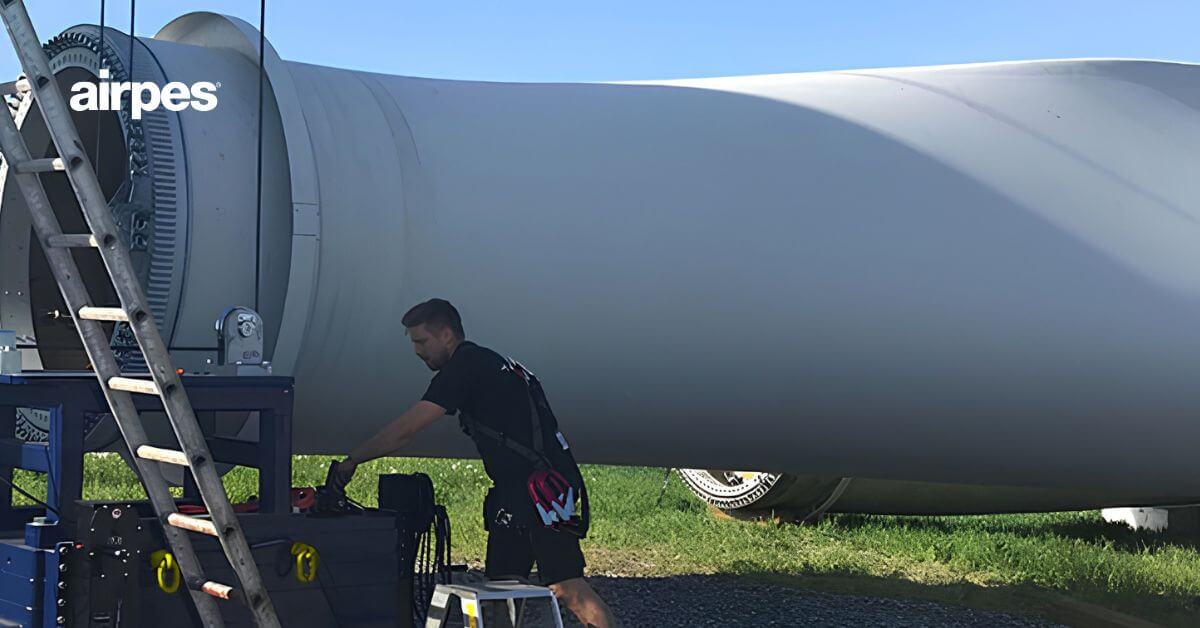
This is where most of the schedule risk and cost sits. In smaller turbines, the rotor can be lifted with all blades pre-attached; at commercial scale today, that’s no longer possible, the assembly is too large and too exposed to wind loading. Blades are lifted and bolted to the hub individually, one at a time.
Two of the three blades are typically attached before the nacelle is raised; the third is bolted on afterwards, with the rotor rotated into position for each attachment point. That rotation is itself a rigging challenge: with two blades already fitted, the hub carries a large, uneven weight that needs a purpose-built counterweight rotation tool to turn safely.
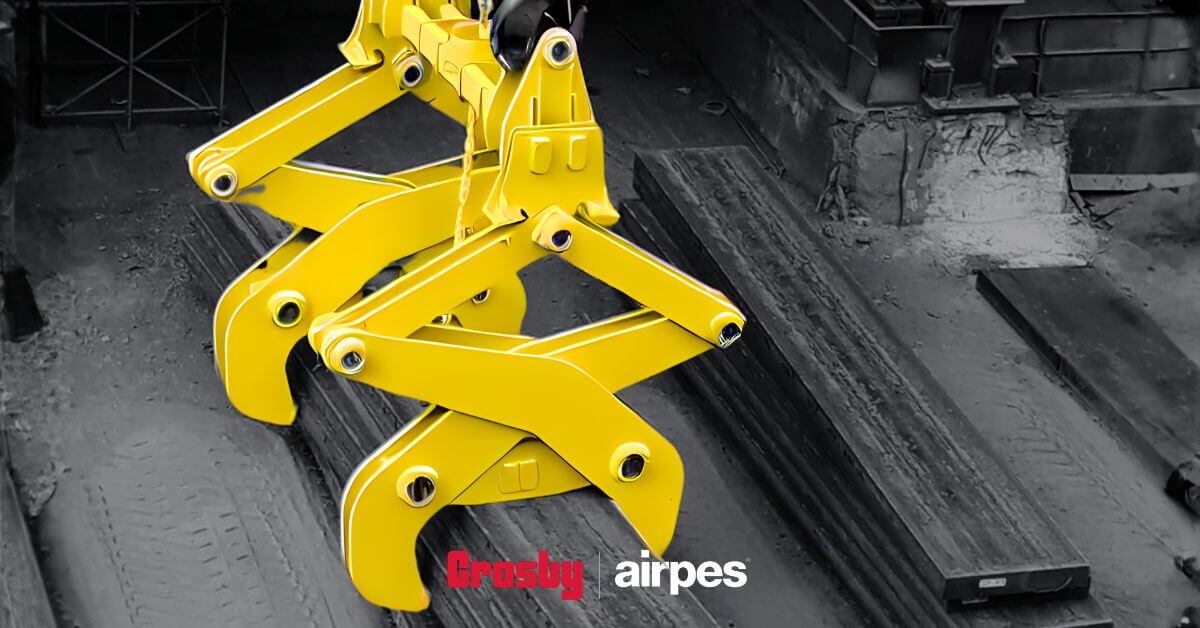
The tool used to grip the blade matters as much as the crane. A blade lifting yoke or clamp installation tool holds the blade by its aerodynamic profile without damaging the laminate, and lets the crew control pitch and rotation precisely while it’s in the air — critical in gusty conditions.
Crane lifting vs. crane-less blade exchange
| Conventional crane lifting | Crane-less blade exchange | |
| Equipment needed | Large mobile/crawler crane + lifting yoke | Winches anchored to the tower/nacelle structure |
| Typical use case | New installation, all blades | Single-blade replacement or repair, in service |
| Mobilisation cost | High — crane transport, assembly, standby days | Low — no external crane required |
| Wind sensitivity | Limited by crane wind-speed rating | Generally more tolerant, site-dependent |
| Best suited to | Greenfield wind farm construction | O&M, blade repair, remote or hard-access sites |
Why are standard cranes no longer enough for new turbine models?
Standard mobile cranes are running out of capacity for the newest turbine generation. As turbines have grown taller and heavier to capture more energy per unit, the number of crane models able to reach hub height with the required load capacity has shrunk sharply and availability, not turbine supply, is now the constraint developers report most often. In August 2026, UK contractors were reported redeploying 750-tonne-class crawler cranes such as the Liebherr LG 1750 directly into onshore wind campaigns, as lifting capacity (not turbine supply) becomes the industry’s real bottleneck. Repowering projects, which replace blades or nacelles on turbines installed years earlier, face the same constraint, often at sites where mobilising a crane that size isn’t economically viable at all.
What is a crane-less blade exchange system and how does it work?
A crane-less blade exchange system is a lifting method that uses the wind turbine’s own tower and nacelle structure as the anchor point, replacing the external crane with winches and cables tensioned from ground level. Airpes has developed a crane-less blade exchange system for exactly this: cables anchored at the base of the generator raise or lower a blade in a fraction of the time and cost a crane mobilisation would take. For turbines in remote or hard-to-access sites, this can be the difference between a repair going ahead and a turbine standing idle.
How are offshore wind turbines installed differently?
Offshore installation follows the same tower, nacelle and blade sequence, but every step is done from a vessel instead of solid ground, which changes both the equipment and the risk profile involved.
After the foundation, usually a monopile or jacket structure, is driven into the seabed, a jack-up installation vessel stabilises itself using its own legs before the crane lifts the tower, nacelle and blades into place, bolting each component as it goes. Weather windows are tighter than onshore, and every lift is tested for stability before the next component goes up.
The vessels themselves are a growing constraint on project timelines. Industry analysis has repeatedly flagged that the global fleet of wind turbine installation vessels (WTIVs) isn’t keeping pace with the number and size of turbines being ordered, with demand for installation vessel capacity projected to run several times higher by 2030 than it is today [2]. For offshore blade and nacelle lifting specifically, this is pushing more of the engineering burden onto the below-the-hook equipment itself , lighter, purpose-built lifting beams and yokes that reduce the load and lifting height a vessel’s crane has to handle.
What safety standards apply to wind turbine lifting equipment?
Lifting equipment used to install a wind turbine has to meet specific engineering standards, not general construction rules, because the loads, heights and consequences of failure are all higher than in a standard lift.
| Standard / body | Applies to | Status |
| EN 13155 | Non-fixed load lifting attachments: lifting beams, C-hooks, clamps, magnets | Current edition BS EN 13155:2020+A1:2025, published March 2026 |
| ASME B30.20 | Below-the-hook lifting devices (US market) | In force |
| CE / UKCA marking | Machinery Directive compliance for equipment sold into the EU/UK | Mandatory for lifting attachments placed on these markets |
| GWO Basic Safety Training | Personnel working at height and on lifting operations in wind | Industry-recognised, required by most turbine OEMs and operators |
Steps to check before commissioning a wind turbine lifting job:
- Confirm the exact weight, centre of gravity and dimensions of the component to be lifted, not just the manufacturer’s nominal spec sheet figure.
- Verify the lifting beam or yoke’s rated capacity, with margin, against that real figure, not against the crane’s maximum capacity.
- Check the certificate of conformity and test record for the specific unit, not just the product line.
- Confirm the standard it was designed and tested against (EN 13155, ASME B30.20) matches the market where the lift is taking place.
- Ask whether load testing was carried out on that exact unit, not only type-tested on a prototype.
How long does wind turbine installation take?
On a straightforward onshore site with good access, installing a single turbine, from tower base to final blade, typically takes several days to about two weeks once the foundation has cured, weather permitting. Offshore installation is generally faster per turbine once a vessel is on site working through several units back to back, but it’s far more exposed to weather delay, and the pre-installation logistics (port operations, vessel scheduling) add weeks the onshore process doesn’t have. Crane or vessel availability, not the mechanical work itself, is usually what determines whether a project finishes on schedule.
Why work with Airpes for wind turbine Lifting Equipment?
Airpes designs and manufactures lifting, weighing and handling equipment from its own factory in Sabadell (Barcelona) and has worked in the wind energy sector for more than two decades. The plant holds ISO 9001, ISO 14001 and ISO 45001 certification, plus ISO 3834-2 for welding quality, and Airpes is a member of APQP4WIND, the quality framework built specifically for the wind supply chain. Airpes counts three of the world’s four largest wind turbine manufacturers among its active customers.
Because every turbine model has different weights, centres of gravity and hook heights, Airpes engineers lifting beams, yokes and crane-less systems to the specific turbine and site rather than offering a fixed catalogue. That custom-engineering approach, backed by in-house load testing and certification services, is what lets installation and O&M teams get equipment that fits the job the first time, instead of adapting generic rigging on site.
Key Takeaways
- Wind turbine installation follows a fixed sequence, foundation, tower, nacelle, blades, commissioning; but each stage is limited by the lifting equipment available, not by the mechanical work itself.
- Blades are always installed individually on commercial-scale turbines, using a lifting yoke or clamp tool that grips the aerodynamic profile without damaging it.
- Crane capacity, not turbine manufacturing, is the bottleneck most reported across onshore wind projects in 2026.
- A crane-less blade exchange system can replace or repair a single blade without mobilising an external crane, cutting cost and downtime significantly.
- Lifting attachments used on a wind turbine must meet EN 13155 (updated March 2026) or ASME B30.20, plus CE/UKCA marking where applicable.
- Offshore installation follows the same sequence from a vessel, but vessel availability is an increasingly tight constraint on project timelines.
Conclusion
Installing a wind turbine is, at its core, a sequence of very large, very precise lifts, and the equipment doing the lifting is usually what decides whether a project stays on schedule. If you’re planning a new installation, a repowering project, or need equipment sized to a specific turbine model and site rather than a generic catalogue item, Airpes’ engineering team can help you specify it before it becomes a bottleneck.
FAQS
How long does it take to install a single wind turbine?
From a cured foundation to a fully bolted rotor, a single onshore turbine typically takes a few days to about two weeks, depending on turbine size, terrain and weather. The foundation needs roughly two weeks to cure beforehand, which usually falls before this window rather than within it.
Can wind turbine blades be installed without a crane?
Yes, for single-blade replacement or repair, not for a full new installation. A crane-less blade exchange system anchors winches to the tower or nacelle structure and lifts the blade using that structure as the support point, significantly faster and cheaper than mobilising an external crane, especially at remote sites.
Why are cranes such a bottleneck in wind turbine installation right now?
Turbines have grown taller and heavier to capture more energy, sharply reducing the number of crane models with the reach and capacity to install them. Reports through 2026 describe large crawler cranes being redeployed specifically to cover onshore wind campaigns as lifting capacity, not turbine supply, becomes the limiting factor.
What's the difference between a lifting beam and a spreader beam?
A lifting beam receives the load from the crane hook at a single top point and distributes it downward to multiple anchor points, working in bending; a spreader beam receives the load at both ends via angled slings and works in compression. Both are used in wind turbine lifting depending on the component’s shape and the headroom available.
How are offshore wind turbines installed differently from onshore ones?
The sequence is the same, foundation, tower, nacelle, blades; but offshore installation is carried out from a jack-up vessel that stabilises itself on the seabed, working within tighter weather windows. Foundations are typically monopiles or jacket structures driven into the seabed rather than a poured concrete base.
Who installs wind turbines?
Installation is carried out by specialised wind farm construction contractors and EPC teams, using civil, electrical and mechanical engineers alongside cranes and below-the-hook lifting equipment supplied by manufacturers such as Airpes. Airpes doesn’t install turbines itself; it engineers and supplies the lifting equipment that installation contractors use.
Let’s develop the right lifting equipment for your wind turbine installation
If your project needs lifting beams, blade yokes or crane-less exchange systems designed for a specific turbine model, we develop custom solutions engineered around your load, crane configuration, and site conditions. Contact us to discuss your wind turbine lifting requirements and find the right solution for your installation.
The engineering team will assess your requirements and propose a solution built around your operation.