1-minute summary: Lifting tongs maintenance is essential to ensure safe, reliable, and efficient material handling operations. Regular inspections, proper lubrication, load control, and integration with the complete lifting system help prevent premature wear, reduce downtime, and extend equipment lifespan. At Crosby Airpes, we design and manufacture customized lifting tongs engineered for each application, helping industrial facilities improve reliability, ensure compliance, and optimize lifting performance.
Lifting tongs maintenance is the set of inspection, lubrication, and load control practices required to ensure safe and efficient material handling operations. Crosby Airpes designs, manufactures, installs, and maintains customized lifting tongs adapted to each application, ensuring compliance with UNE- EN 13155 and ISO standards. Through preventive maintenance programs, load testing, and operator training, Crosby Airpes helps industrial clients reduce downtime, extend equipment lifespan, and improve lifting safety in demanding environments.
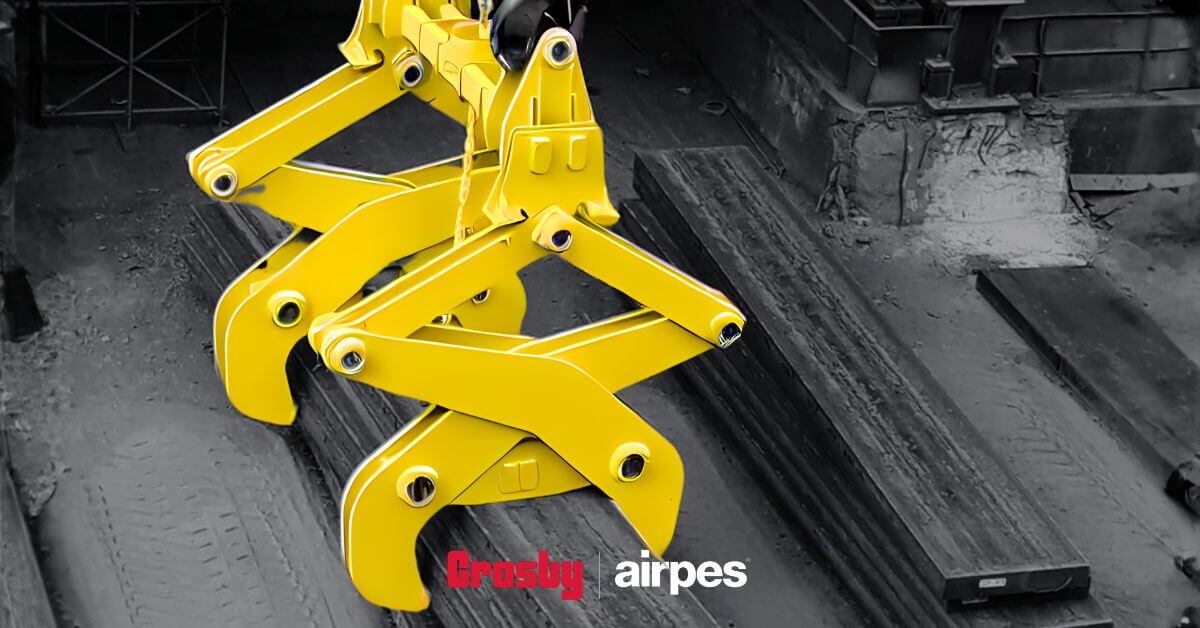
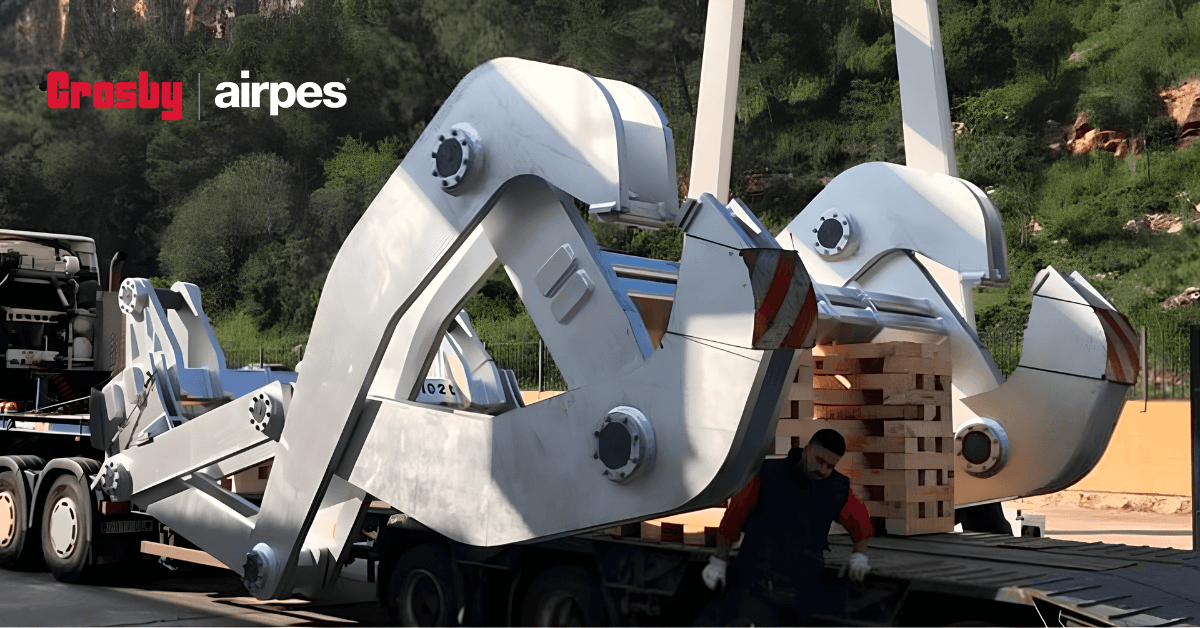
In industrial lifting operations, equipment reliability directly affects safety, uptime, and operational costs. Lifting tongs, commonly used for handling steel coils, plates, concrete blocks, or timber, are subject to repeated stress cycles that can degrade performance if not properly maintained. In the fast-paced world of industrial operations, the reliability of your lifting equipment directly impacts both your bottom line and the well-being of your workforce.
Whether you are managing a bustling logistics warehouse, overseeing a manufacturing plant, or sourcing reliable material handling solutions for construction sites, prioritizing equipment efficiency is a daily necessity. For plant engineers and maintenance managers, implementing a structured lifting tong maintenance strategy is not optional; it is essential to meet safety standards and avoid unplanned failures.
At Crosby Airpes, maintenance is approached as a lifecycle strategy: from design validation and load testing to inspection protocols and refurbishment services.
Understanding lifting tongs capacity
To get the most out of your equipment, operators must first understand capacity and limitations. Improper loading is the number one cause of premature mechanical failure.
A foundational element of equipment care is understanding the distinction between Safe Working Load vs Working Load Limit.
- The Working Load Limit (WLL) is the absolute maximum mass the manufacturer specifies the tool can hold safely in a flawless, straight-line pull.
- The Safe Working Load (SWL) adapts to the specific, real-world conditions of the lift—factoring in dynamic movements, environmental factors, and angles.
Consistently pushing a lifting tong past its SWL accelerates structural wear, warps the gripping pads, and ultimately compromises the integrity of your heavy lifting operations.
Essential maintenance practices for lifting tongs
Maintenance isn’t just about fixing things when they inevitably break; it is about proactive, strategic care. Implementing a structured maintenance routine ensures longevity and safety.
Daily visual inspections
Before starting any shift, operators should perform a comprehensive visual check.
- Inspect the jaws and gripping pads: Look for dullness, missing teeth, or excessive wear. If the grip is compromised, the load can slip.
- Check pins and hinges: Look for micro-fractures, rust, or signs of deformation.
- Evaluate connecting gear: If your tongs are suspended via cables, this is also the ideal time to review how to inspect wire rope slings for damage, looking for crushed strands, broken wires, or severe corrosion.
Lubrication and mechanical checks
The pivot points on a lifting tong bear immense mechanical stress during a lift. Apply high-quality, manufacturer-approved industrial lubricants to all moving parts on a weekly basis. This prevents friction-induced wear, guards against rust in damp environments, and ensures the jaws open and close seamlessly without jamming.
Load dynamics and tension testing
Over time, constant use can cause the grip tension to loosen. Regularly test the clamping force. Furthermore, operational habits directly impact equipment health. When dealing with asymmetrical items, correctly calculating the center of gravity for unbalanced loads is vital. If the tongs aren’t gripping the true center, the load will tilt, placing uneven stress on one side of the tong’s hinges and leading to rapid, uneven degradation.
While routine inspections help detect wear and mechanical issues, integrating predictive maintenance strategies based on equipment condition and operational data allows maintenance teams to identify potential failures earlier, reduce unplanned downtime, and optimize service intervals.
Integrating tongs with the broader lifting ecosystem
Even the best-maintained lifting tong is only as effective as the system powering and supporting it. Choosing the right rigging hardware for heavy loads ensures your tongs function safely without putting undue stress on the primary attachment points.
Depending on your facility’s operational setup, your tongs might be attached to various hoist mechanisms. Facility managers often weigh the functional differences of an electric chain hoist vs manual lever block. Electric hoists provide consistent, smooth, and jerk-free lifting—which is ideal for preserving the lifespan of heavy tongs—whereas manual lever blocks offer localized, millimeter-precision control in off-grid or highly confined environments.
If you are suspending your tongs from larger structural systems, strict adherence to overhead crane safety protocols and training is absolutely crucial. Training operators to avoid sudden stops and swinging loads will drastically reduce the kinetic shock absorbed by the lifting tong. For temporary or more flexible setups, strictly following a mobile gantry crane assembly guide ensures the supporting framework is structurally sound and balanced before attaching any heavy-duty rigging and lifting loads.
Integrating lifting tongs with lifting systems
A lifting tong does not operate in isolation. Its performance depends on the full lifting system.
Critical integration factors:
- Hoisting equipment: electric hoists provide smoother load control than manual systems
- Crane dynamics: sudden stops or load swings increase dynamic stress
- Rigging compatibility: improper shackles or slings can create load concentration points
Refer to our overhead crane safety guide for system-level optimization. Crosby Airpes engineers validate full lifting assemblies to ensure compatibility between tongs, cranes, and rigging elements.
Building a preventive maintenance strategy for lifting equipment
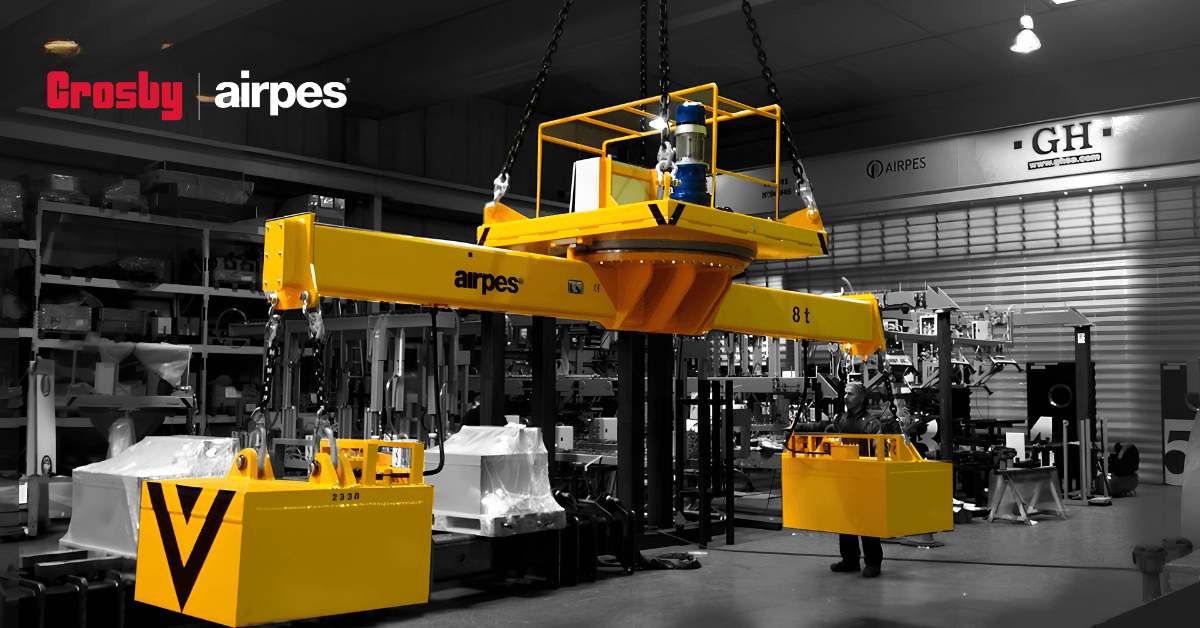
Lifting tongs are just one piece of the operational puzzle. Developing a preventive maintenance strategy for all lifting equipment from cranes and hoists to below-the-hook devices helps improve equipment reliability and reduce lifecycle costs. A robust safety culture means maintaining all your equipment to the highest possible standards. To achieve this, implement a comprehensive industrial hoist maintenance checklist that covers everything from your tongs and safety latches to brake mechanisms and limit switches.
Furthermore, staying compliant with legal frameworks is not optional. For facilities operating in the UK or under similar international safety frameworks, familiarizing your management team with LOLER inspection requirements for commercial machinery is essential. The Lifting Operations and Lifting Equipment Regulations (LOLER) mandate that your lifting tongs and all associated gear undergo thorough, documented examinations by a competent person at legally defined intervals.
Application-based equipment selection
Using the correct handling equipment for each application reduces maintenance needs, improves lifting safety, and helps extend the service life of the equipment.
Examples:
- Fragile materials: vacuum lifters instead of mechanical tongs
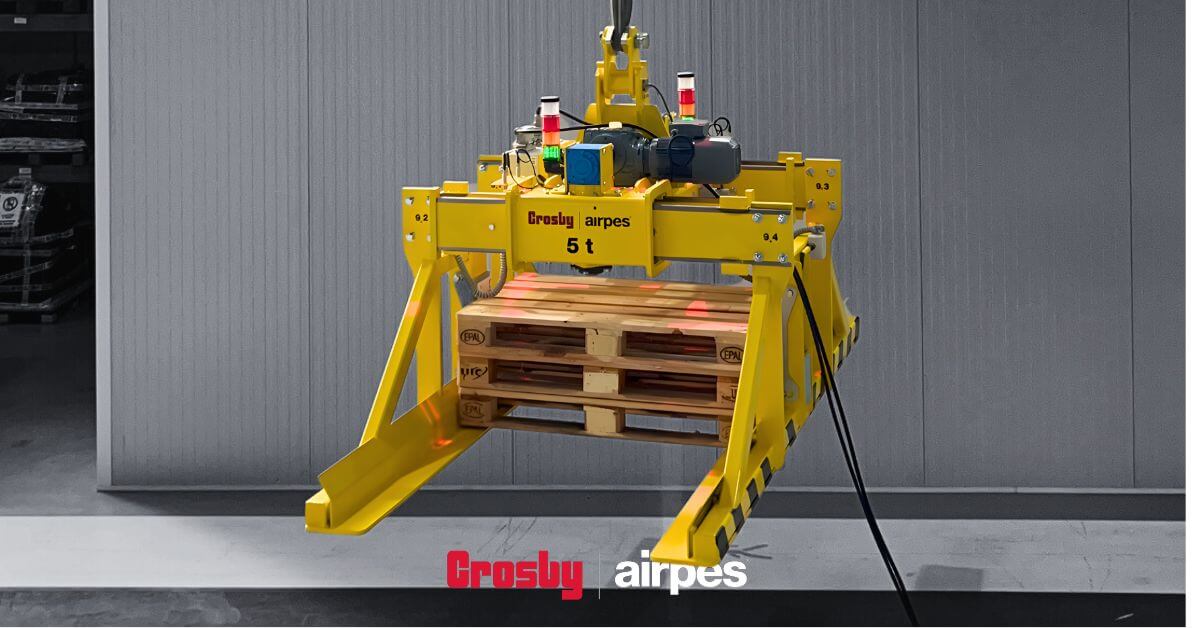
- Pallet handling: hydraulic pallet trucks for ground transport
- Assembly processes: workstation cranes for repetitive lifting
- Yard logistics: forklift attachments for flexible operations
Selecting the right solution prevents misuse, one of the main causes of premature failure.
Matching the right tool to the task
Proper maintenance also means using the tool exactly as intended. Misuse is a leading cause of rapid equipment degradation. A lifting tong is unparalleled for moving rugged, solid materials, but it is not a universal solution. Protecting your tongs means knowing when to use an alternative tool.
- Fragile items: If you are handling delicate, smooth materials, swap out the mechanical tongs for vacuum lifters for glass and fragile materials to prevent surface damage.
- Ground-level transport: For moving palletized goods through tight warehouse aisles, you might rely on the benefits of hydraulic pallet jacks in small spaces rather than overhead lifting.
- Assembly lines: In high-volume manufacturing environments, utilizing ergonomic workstation cranes for assembly lines keeps production moving smoothly and safely without over-relying on oversized, heavy-duty tools.
- Yard logistics: For complex outdoor yard tasks, integrating heavy-duty forklift attachments for specialized tasks can take the daily pressure off your overhead crane systems and dedicated tongs.
FAQS
What is the recommended inspection frequency for lifting tongs?
Lifting tongs should be inspected daily by operators and periodically by qualified personnel. Daily checks focus on visible damage, while monthly and annual inspections ensure compliance with ISO 9927-1 and EN 13155. In high-use environments (e.g., >1,000 cycles/month), more frequent inspections are recommended to detect wear early and avoid operational downtime.
How can I tell if a lifting tong has lost gripping force?
A lifting tong has lost gripping force if the load shows instability, slippage, or uneven contact during lifting. This often results from worn pads, misaligned pivots, or mechanical fatigue. Regular load testing and visual inspection of gripping surfaces help detect this issue before it becomes a safety risk.
What happens if I exceed the Safe Working Load (SWL)?
Exceeding SWL causes structural stress beyond real operating limits, even if WLL is not exceeded. This leads to accelerated wear, deformation, and potential failure of critical components. It also violates safety regulations and can invalidate certifications or insurance coverage.
Are lifting tongs covered by international safety standards?
Lifting tongs are regulated under standards such as EN 13155 and ISO 9927-1, which define design, testing, and inspection requirements. In regions like the UK, LOLER regulations mandate periodic inspections by competent persons. Compliance ensures safety, traceability, and legal conformity.
Let’s develop the right lifting tong for your operation
If your facility needs a lifting tong designed for its specific handling requirements, we develop custom solutions engineered around your load, crane configuration, and operating conditions. Contact us to discuss your lifting requirements and find the right solution for your application.
The engineering team will assess your requirements and propose a solution built around your operation.