1-minute summary: A scissors lifting tong is a gripping solution that uses a scissor-style mechanism to lift heavy loads safely and efficiently. It is especially useful in industrial plants where the load geometry, available headroom, duty cycle or surface sensitivity make standard lifting devices less effective. In steel and siderurgical environments, the real value often comes from adapting the tong to the application rather than forcing the application to fit a catalog model. A custom-engineered solution can improve safety, load protection, service life and integration with the crane or hoist system, helping plants solve specific handling problems with greater reliability.
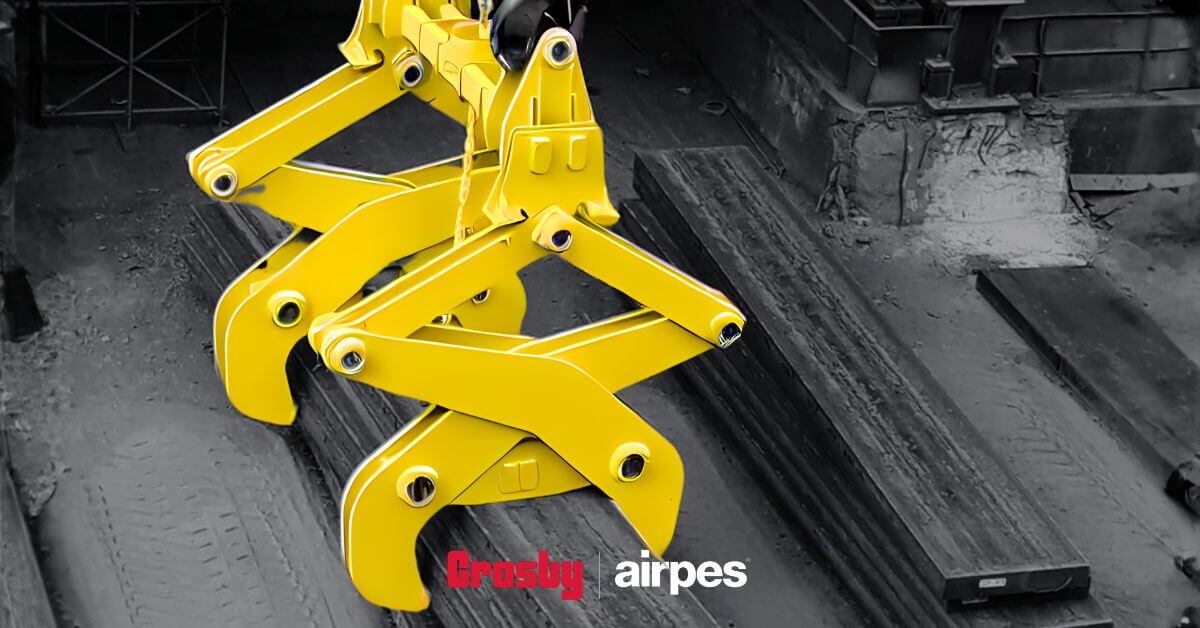
A scissors lifting tong is a lifting device designed to grip a load through a scissor-style motion generated as the load is raised. In industrial plants, this mechanism is used to handle heavy materials safely while keeping the lifting cycle practical and repeatable. However, not every plant can rely on a standard design. In steel and siderurgical environments, the real challenge is often not simply lifting the load, but doing it within the constraints of temperature, available space, crane configuration, surface protection and high duty cycles.
At Crosby Airpes, we develop lifting scissors tongs engineered around the application, so the equipment matches the load and the plant instead of forcing the plant to adapt to a generic device.
Maybe you’re also interested in: Types of Lifting Equipment: A Practical Guide
What Is a Scissors Lifting Tong?
A scissors lifting tong uses a linked gripping structure that closes as the load is engaged and lifted. This principle allows the equipment to apply a secure holding force while keeping the handling process relatively simple from an operational point of view. Depending on the application, the tong can be configured for different sizes, capacities, hook arrangements and control systems.
This type of solution is often selected when the user needs reliable vertical or horizontal handling for heavy loads and wants a robust mechanism that can be integrated with the existing crane or hoist setup.
How Scissors Tongs for Lifting Work in Real Plants
In practice, scissors tongs for lifting are only effective when they are properly matched to the load and the operating conditions. The geometry of the load, the gripping area, the available headroom and the duty cycle all influence the final design.
| Plant condition | Why it matters |
| Load dimensions and weight | They determine tong size, structure and gripping force. |
| Surface sensitivity | They affect the choice of pads and gripping surfaces. |
| Hook configuration | It defines whether the tong should be designed for one or two hooks. |
| Duty cycle | It influences structural reinforcement and long-term reliability. |
| Operating environment | It affects coatings, safety features and maintenance needs. |
This is why many industrial users discover that a standard product is not enough once the equipment has to work inside a real plant rather than in ideal conditions.
When Standard Lifting Scissors Tongs Are Not Enough
Standard lifting scissors tongs can be useful in repetitive and relatively predictable operations, but many plants face conditions that demand something more specific. If the load varies, if the plant has limited clearance, if the slabs or parts are hot, or if the operation runs with high service factors, the risk of poor fit increases.
A mismatched tong can create several problems. It may slow down handling, reduce operator confidence, increase wear, affect load protection or require workarounds that make the whole process less efficient. In sectors such as steel and heavy manufacturing, these issues usually become production issues very quickly.
Standard vs Custom Scissors Lifting Tongs
Criteria | Standard solution | Custom-engineered solution |
Fit to the load | Limited | Designed for the real geometry and weight range |
| Integration with crane or hoist | Often generic | Adapted to the actual lifting setup |
| Surface protection | Basic | Defined according to material sensitivity |
| Performance under high duty cycles | Variable | Engineered for the plant’s service conditions |
| Long-term efficiency | Can require compromises | Built to support the real process |
For customers working with steel products, this difference is critical. A custom design can improve safety, reliability and service life while reducing the hidden cost of using equipment that was never truly adapted to the application.
If your main requirement is slab handling, it is worth reviewing our custom slab tong solutions to understand how the lifting concept changes when the application is centered specifically on steel slabs.
Common Plant Challenges a Custom Design Can Solve
A good engineered solution begins by identifying the real restriction inside the plant. In many projects, the problem is not lack of lifting capacity, but lack of adaptation.
| If your plant faces this challenge | A custom design helps by |
| Very high temperatures | Selecting suitable materials and protection features |
| Limited headroom | Adapting geometry to the available lifting space |
| Different load sizes | Defining the right opening range and gripping behavior |
| Surface damage concerns | Adding non-marring pads and suitable contact areas |
| Heavy-duty cycles | Reinforcing the structure for long service life |
These are the situations in which customers should actively move away from off-the-shelf equipment and toward a purpose-built solution.
When evaluating a scissors lifting tong, it is also worth considering recognized safety guidance for below-the-hook lifting devices, such as ASME B30.20.
What to Define Before Requesting a Solution
Before developing a tong, we recommend defining a few key points clearly: the type of load, dimensions, weight range, temperature, gripping area, crane or hoist arrangement, and the frequency of use. This information allows the design to reflect the real process instead of relying on assumptions.
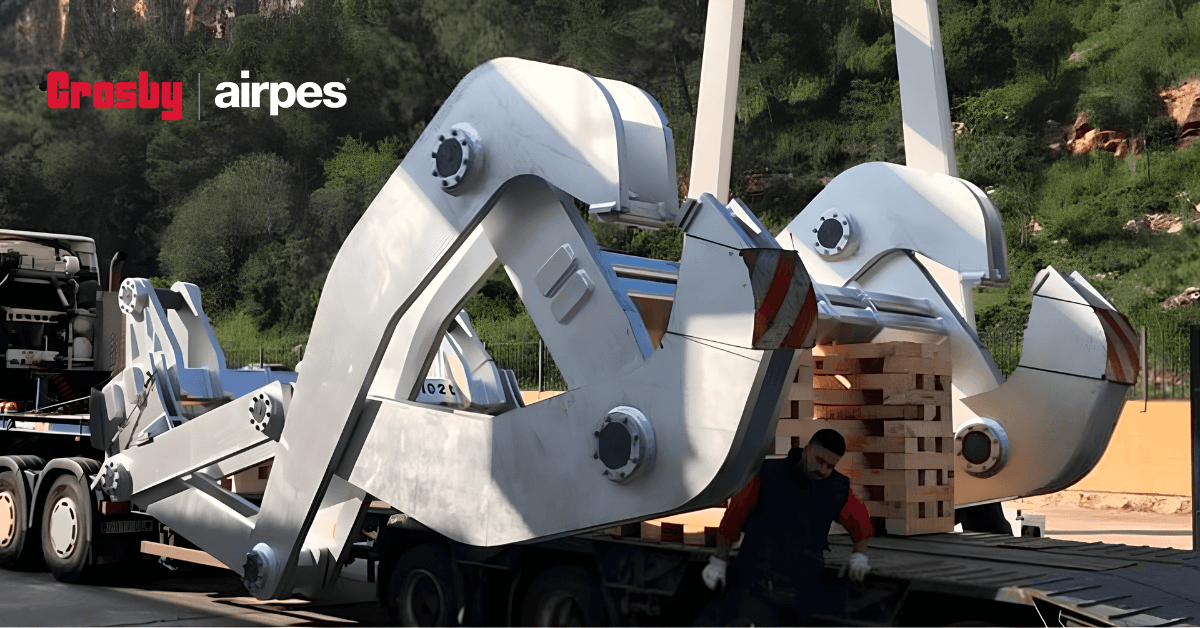
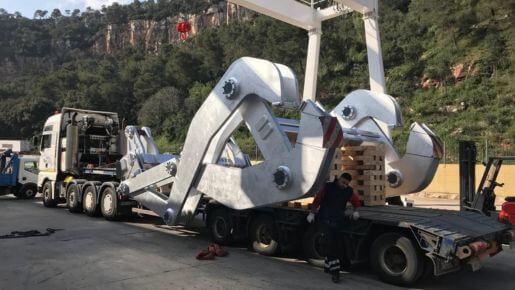
For applications involving very high capacities and demanding working conditions, a proven project can help frame the discussion. See this 102-ton scissor lifting tong example as a reference of the type of heavy-duty challenge that may require a fully engineered approach.
Why Crosby Airpes Develops Engineered-to-Application Solutions
At Crosby Airpes, we develop scissors tongs for lifting for customers who need more than a catalog answer. We work around the actual load, the available lifting installation and the operating conditions of the plant. That means defining the right capacity, opening range, contact surfaces, control options and structural features from the beginning.
For steel, siderurgical and other heavy industrial sectors, this approach helps operators gain a safer, more dependable and more durable lifting solution. More importantly, it helps customers avoid the compromises that often come with standard equipment in non-standard environments.
FAQS
Are scissors lifting tongs suitable for high-duty industrial plants?
Yes, provided they are designed for the actual service conditions of the plant. In high-duty industrial environments, a scissors lifting tong must do much more than simply lift the load. It has to withstand frequent operating cycles, integrate properly with the crane or hoist system, maintain gripping reliability over time and minimize wear in demanding conditions. When the application involves heat, variable load sizes or continuous production, a custom-engineered design is usually the best choice because it supports safer handling, longer service life and more consistent plant performance.
What is the difference between a slab tong and a scissors lifting tong?
The difference is mainly one of focus. A scissors lifting tong usually refers to the gripping mechanism, meaning the tong closes and holds the load through a scissor-style movement. A slab tong, by contrast, usually refers to the application, meaning the equipment is intended specifically for handling slabs. In many cases, a slab tong may use a scissor mechanism, so the terms can overlap. However, the first emphasizes how the tong works, while the second emphasizes what kind of load it is designed to handle.
Can a scissors lifting tong be adapted to an existing crane or hoist?
Yes. One of the main advantages of a custom solution is that it can be developed around the existing lifting installation rather than forcing the user to modify the plant. A scissors lifting tong can be adapted to the available headroom, hook configuration, lifting points, opening range and operating clearances of the crane or hoist already in service. This is particularly important in steel plants and other heavy industrial environments, where space restrictions and process conditions often make standard equipment less efficient, less practical or harder to integrate safely.
When should a plant avoid a standard tong?
A plant should avoid a standard tong when the application includes unusual load dimensions, sensitive surfaces, harsh operating conditions, high temperatures or demanding duty cycles. In those situations, a catalog model may appear adequate on paper but still perform poorly in daily operation. The result can be slower handling, reduced load protection, premature wear or awkward integration with the lifting setup. When the process has real technical constraints, a custom-engineered tong usually provides better fit, safer handling, longer useful life and a more reliable overall lifting solution.
Let’s Develop the Right Scissors Lifting Tong for Your Plant
If your plant needs a scissors lifting tong that fits the real lifting process, we develop custom solutions built around your load, your crane setup and your operating conditions. Contact us to discuss your application and move beyond the limits of standard equipment.
The engineering team will assess your requirements and propose a solution built around your operation.