1-minute summary A coil transfer car is a mobile platform designed to move industrial coils of any type, size and weight within a facility, minimising risk to both operators and materials. There are two main variants: rail-mounted, which are more energy-efficient and suited for fixed routes with heavy loads, and wheeled, which are more flexible and versatile for movement in any direction. Applications span sectors such as electrical (where the coil transfer car handles cable reels) steel, and paper, each with its own specific requirements. Units can be equipped with remote control and integrated with plant automation systems. Crosby Airpes designs and manufactures custom coil transfer cars, including the recertification of existing equipment.
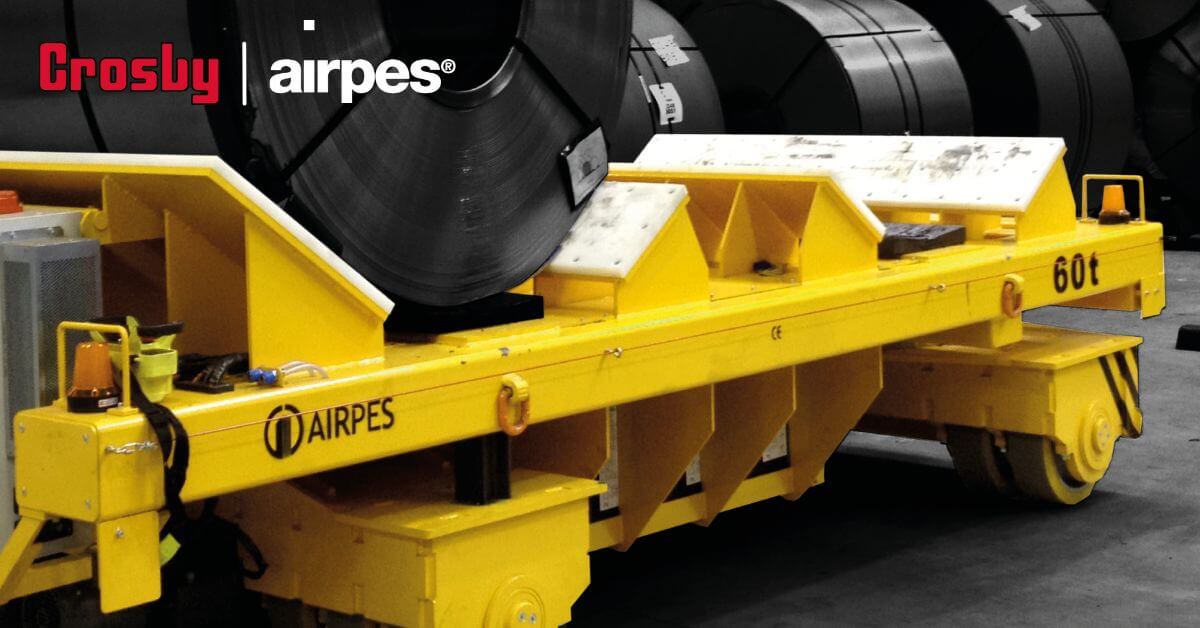
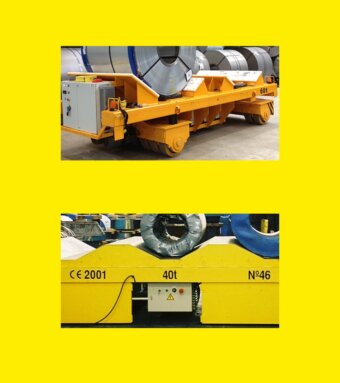
Coil transfercars are mobile platforms for the transport of coils of any type, weight and size.
A coil transfercar is used for the transport of large coils, especially when they need to be transported from a section of the factory to another with all the safety.
This prevents the coil from becoming damaged, and it also reduces the risk of injuries to workers who are handling the coil or damage to infrastructure of the company or its premises.
Types of transfercars for coils
When it comes to choosing the best coil transfercar system for a given job, the first step is to figure out the specific requirements of the job and the materials you’ll be working with.
Once you know what you’re looking for, you’ll be able to narrow down your search to the best possible coil transfercar for the job.
There are two main types of coil transfercars: on rails or wheeled transfercars.
Each type of transfercar has its own advantages and disadvantages, but which one is best for you depends on the specific needs of your project.
Transfercar on rails
When it comes to energy efficiency, transfercar on rails are really efficient on energy consumption and allow to transport very high loads with a lot of security.
Transfercar on rails have the efficiency of rail freight transport but are adapted to the needs of your company and with all the security systems you may need.
Their modular design allows for easy customization, making them perfect for any type of transportation needs. In addition, coil transfercars on rails have a low center of gravity and are extremely durable, making them a durable and dependable option for transporting high-value cargo.
Finally, they have a very long life-span and long time periods between mechanical checkings, so if rails can be installed in the premises, transfercars on rails are a great fit for companies looking to minimize operational costs in the long term and reduce their impact on the environment.
Transfercar on wheels
Rail transfercars are efficient, but they can be cumbersome and difficult to move, since the liberty of movement they offer is limited to the rail installation they have. They are also usually only used for large, heavy loads.
In contrast, wheeled transfercars are much more flexible and can be used for transporting smaller loads to virtually any part of the factory or premises from the company, so they are more flexible in that aspect.
They are also equipped with the most advanced security systems to protect against collisions.
In some cases, wheeled transfercars can even be used to move to only coils but any kind of equipment between buildings: they simply roll along floors in a stable and slow pace, making them more versatile and flexible than rail transfercars ever were.
What types of coils is a coil transfer car used for?
The versatility of a coil transfer car makes it suitable for multiple industrial sectors, but the type of coil determines both the equipment design and the clamping systems required.
In the electrical and telecommunications industry, the use of a coil transfer car is particularly common for handling cable reels. These coils can reach considerable weights and highly variable diameters, so the coil transfer car must be designed with lateral support and locking systems that prevent any displacement during transport.
In the steel industry, hot-rolled or sheet steel coils require transfer cars with very high load capacity and specific support surfaces that protect the material without deforming it. In these environments, the coil transfer car is typically integrated into continuous production lines where cycle time is critical.
In the paper sector, paper or cardboard reels tend to be more voluminous relative to their weight, which calls for a transfer car design focused on volumetric stability rather than pure structural resistance.
In all cases, the starting point for selecting the right coil transfer car is knowing the maximum weight, outer diameter, core diameter, and the floor or track conditions along which it will travel.
Additional systems for your transfercar
In Crosby Airpes we are specialized in the design and manufacturing of many different types of weighing and lifting systems, and that includes also transfercars.
Our transfercars can be equipped with many different extra systems so you can have the exact product that will adapt to your needs or those of your company.
Check our complete catalog of services here:
Remote control
All of the Crosby Airpes’ electromechanical and electro-hydraulic equipment has a remote-controlled function for verifying machine status, so that includes also the transfercars.
Also our remote control systems will allow you to operate your transfercar from the distance to avoid human interaction with the machine while on operation, reducing substantially the personal damages in case of accidents.
Certifications of old systems
If you have an old coil transfercar that needs to be renewed you do not need to invest on a completely new one: we can make all the changes in the machinery and security systems so it is completely certified with the most modern security standards for your industry.
We already make ISO Certifications for cranes, so it means we can do the same with your old (but still operational) coil transfercar.
Additional systems you may need to handle coils
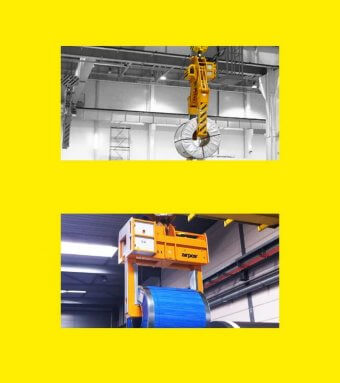
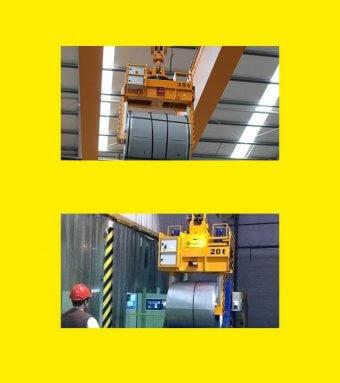
Some of the lifting systems that usually work together with coil transfercars (and we also can help you installing them) are the following.
Take a look at some of the other transfercars projects we have installed around the world:

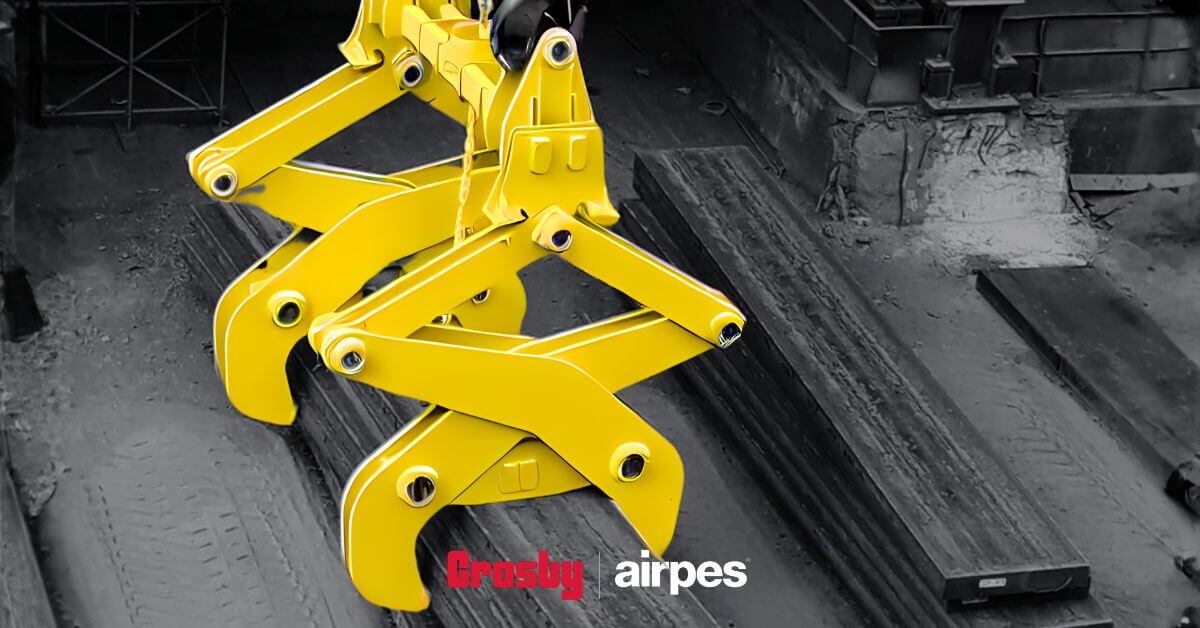
COIL LIFTING TONGS
Check out our vertical coil tongs, designed by our engineers to meet every customers' requests on mechanical features, electronic components,…COIL LIFTING TONGSSeptember 22, 2020
TRANSFER CART
At Airpes we specialize in the design and manufacture of high-tech transfer carts tailored to the specific needs of industrial facilities.…TRANSFER CARTSeptember 22, 2020
PAPER COIL TONG
At Crosby Airpes, we design and manufacture paper coil tongs tailored to your specific operational needs. Our advanced lifting systems…PAPER COIL TONGNovember 26, 2020
Frequently asked questions about the coil transfer car
What safety regulations apply to the use of a coil transfer car in industrial environments?
The operation of a coil transfer car on the shop floor is subject to the European Machinery Directive (2006/42/CE), which sets out the essential health and safety requirements for equipment of this type. Depending on the sector, additional specific regulations may apply regarding industrial flooring, maximum axle loads, and emergency stop systems. It is strongly recommended that any coil transfer car installation be validated by a qualified engineer who can assess both the equipment and the actual conditions of the working environment, including slopes, expansion joints, and potential interference with other production lines.
Can a cable coil transfer car operate outdoors or in high-humidity environments?
Yes, but it requires specific adaptations. A coil transfer car designed for outdoor use must incorporate adequate IP-rated protection on all electrical components, corrosion-resistant running gear, and (in climates with significant temperature variation) materials that can withstand differential thermal expansion. High humidity can affect both braking systems and position sensors if they are not properly protected. In these cases, the equipment selection process must include a detailed analysis of the environmental conditions of the operating environment.
How long does it take to install a coil transfer car on an existing production line?
Installation time depends on multiple factors. If a rail-based system is chosen, a preliminary phase of floor preparation or track installation must be factored in, which can take several days. For wheeled systems, integration tends to be faster as no civil work is required. In both cases, commissioning time, calibration, and operator training must also be added. As a general rule, coil transfer car installation projects on active production lines are planned in phases to minimise disruption to ongoing operations.
Is it possible to integrate a coil transfer car with plant automation or SCADA systems?
Yes. Modern coil transfer cars can be integrated with industrial automation systems using standard protocols such as Profibus, Profinet or Modbus, enabling control from the plant SCADA or a central PLC. This integration allows for automatic route programming, work cycle logging, and predictive maintenance management. It is a particularly relevant feature in highly automated plants where the coil transfer car forms part of a continuous production line and must be synchronised with other equipment.
We can help you designing the coil transfercar you need
Contact us if you need a coil transfercar, our team is here to help.