1-minute summary: Installing an overhead electromagnet beam is a turning point for any steel facility: cycle times drop, operators stop wrestling with slings and clamps, and large plates move without surface damage or manual intervention. The beam format (multiple electropermanent modules along a spreader bar) distributes magnetic force evenly across the full load, holds it securely with no continuous power draw, and keeps the load safe even during a power failure, all while consuming up to 90% less energy than traditional electromagnets. The article walks through the five specification factors that matter most (load dimensions, surface condition, beam geometry, motorised turning option and sheet separation from stacks) covers the industries that gain most (steel service centres, shipbuilding, structural fabrication and heavy machinery), and closes with a safety checklist, regulatory references (Machinery Directive, ASME B30.20) and Crosby Airpes’ engineering methodology, which models magnetic force distribution before any component is manufactured.
There is a before and an after in every steel facility that switches to an overhead electromagnet beam. The difference is not subtle: cycle times drop; operators stop fighting with slings and clamps; thin sheets that used to require two people and a lot of patience get lifted cleanly, one after another, without contact damage…
If you work in steel processing, shipbuilding, structural fabrication or any industry where ferrous plates and profiles move constantly overhead, this article is for you. We are going to go beyond the basics; not just what an overhead electromagnet is, but how to configure one correctly for your specific operation, what to watch out for during specification, and why the beam format changes everything when you are integrating magnetic lifting into an overhead crane.
What exactly is an overhead electromagnet beam and why does the beam format matter?
An overhead electromagnet is a magnetic device mounted to a crane or hoist that lifts ferrous loads (steel plates, slabs, beams, profiles) by generating a controlled magnetic field. No mechanical contact, instant release on command.
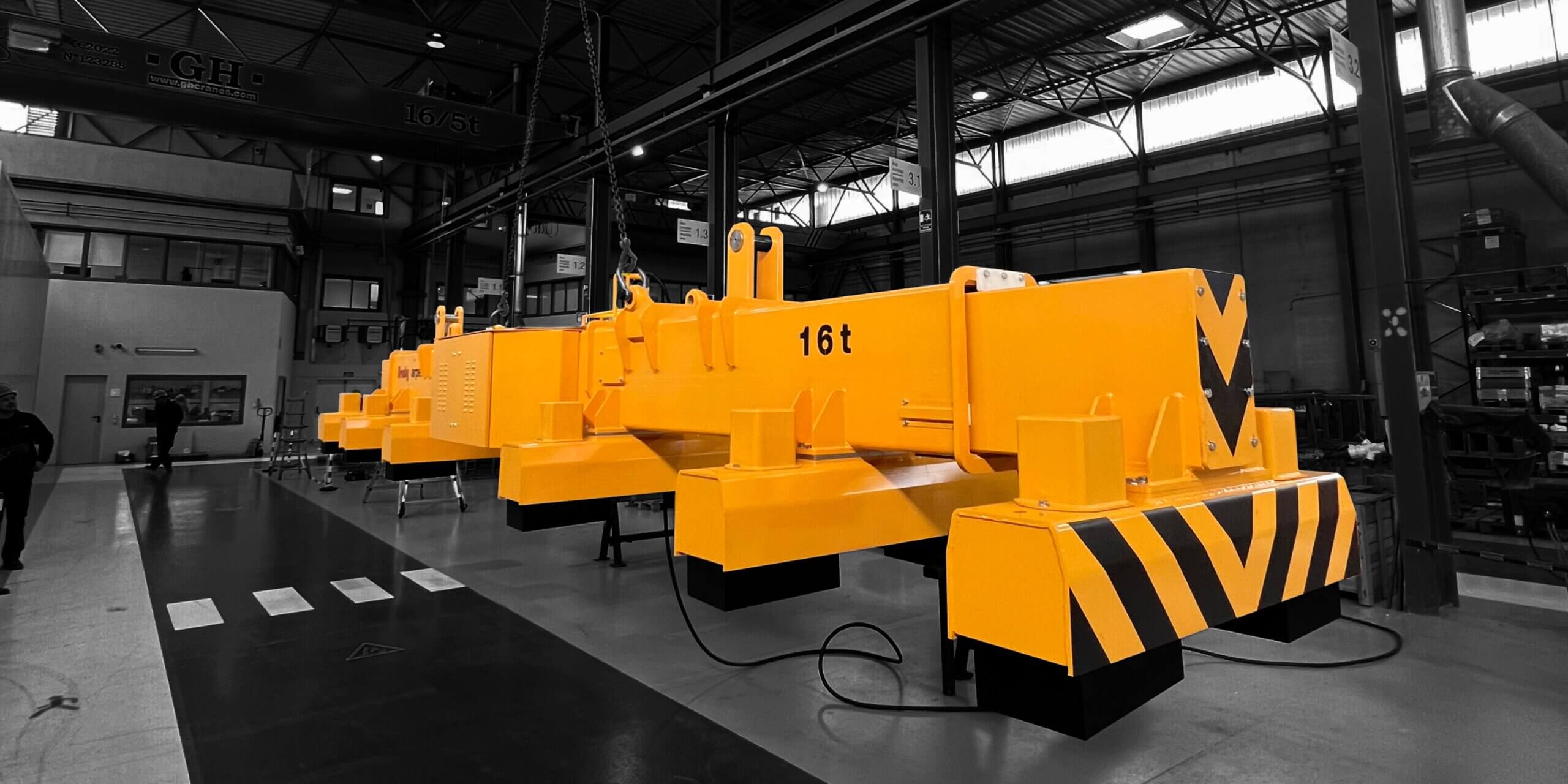
What makes the beam format specifically valuable is the geometry. A single magnet head has a limited contact area. When handling large steel sheets or distributing load across a wide span, that is simply not enough. The beam integrates multiple magnet modules along a structural steel spreader bar, creating a system that:
- Distributes magnetic force evenly across the full plate length
- Eliminates bending stress on thin material during the lift
- Handles multiple sheets or profiles in a single pass
- Integrates directly with the crane hook; no additional rigging required
This is the critical difference between a standalone lifting magnet and a full overhead electromagnet beam. One is a tool and the other is a system built into your crane infrastructure.
Electropermanent vs. traditional: which overhead electromagnet should you use?
Not all overhead lifting electromagnets work the same way. The technology choice has direct implications for safety, energy cost and operational continuity.
Traditional electromagnetic overhead magnets
These require continuous electrical current to hold the load. If power is interrupted (for any reason) the load drops. In a precision steel environment, that risk profile is difficult to justify. Traditional magnets remain common in scrap and recycling applications where load control precision is less critical.
Electropermanent overhead lifting electromagnets
An electropermanent overhead lifting electromagnet uses a brief electrical pulse only to switch the field on or off. Once activated, permanent magnetic material holds the load: no continuous power needed. If power goes down, the load stays secure.
Key operational advantages in an overhead crane context:
- Power failure safety: the load cannot drop due to electrical interruption
- Energy efficiency: up to 90% lower consumption than continuous-duty electromagnets
- Fast cycle times: activation and deactivation in seconds
- No thermal buildup: no continuous current means no heat accumulation; relevant in high-duty-cycle operations
For most overhead crane applications in steel processing, the electropermanent configuration is the correct technical choice. Our electropermanent magnet solutions are engineered around this technology for exactly these reasons.
You may be interested in: What is a lifting electromagnet system and how does it work?
5 things to get right when specifying an overhead electromagnet beam
An overhead electromagnet beam is not a catalogue item you order by size. It needs to be engineered around your specific operation. Here is what matters most:
1. Define your load precisely
Specify plate dimensions (length × width × thickness), weight per lift and material grade. Stainless steel and certain alloys have significantly lower magnetic permeability; this directly reduces achievable lifting force.
Practical tip: always specify for the most challenging load in your mix, not the average. Thin, oily or lightly rusted surfaces all reduce effective grip compared to clean, thick stock.
2. Understand your air gap conditions
The air gap (the distance between the magnet face and the load surface) is one of the most underestimated variables in magnetic lifting performance. Even a few millimetres of gap due to surface waviness, protective coating or slight warping can reduce holding force by 20–40%, depending on magnet design and gap magnitude. If your plates regularly have paint or protective film, this must be factored into the safety coefficient; not left as a margin note.
3. Specify the beam geometry for your crane span
Beam length and the number of active modules must match both the load dimensions and the crane hook configuration. A correctly designed beam distributes lifting force without creating stress concentrations: this is especially important when handling large-format plates susceptible to bending.
4. Consider the motorised turning option
A motorised turning kit integrated into the beam allows the operator to rotate the load from the crane cabin (no manual intervention, no slings). For operations that move plates from horizontal storage to a vertical welding fixture, this is a genuine time-saver and a significant safety improvement.
5. Plan for thin sheet separation
When lifting individual sheets from a stack, pre-magnetisation of the sheet below is common. Without active management, you risk lifting two sheets instead of one. Modern systems address this with electronic pulse sequences that demagnetise the second sheet during pick-up. Make sure this feature is part of your specification conversation.
Which industries benefit most?
Steel service centres and plate processing: high-volume sheet turnover makes every second per cycle count. Fast activation, no rigging time and reliable sheet separation translate directly into measurable throughput gains — this is the application the technology was built for.
Shipbuilding and offshore fabrication: large structural panels often move in environments where slings are impractical and manual attachment is genuinely hazardous. A crane-mounted magnet system provides secure, contact-free handling across complex geometries where conventional rigging simply cannot perform reliably.
Structural steel fabrication and assembly: moving beams, profiles and plates between cutting, welding and assembly stations without manual rigging eliminates a persistent operational bottleneck.
Heavy machinery manufacturing: where large ferrous components need precise positioning, the combination of crane reach and magnetic holding provides accuracy and repeatability that mechanical grabs cannot match.
Safety checklist for overhead electromagnet beam operations
Safe operation of any overhead lifting electromagnet starts with the right equipment and is sustained by the right protocols:
- Verify the safety coefficient for every new load type (coated or painted stock performs differently from clean plate).
- Establish a no-stand zone beneath active lifts, non-negotiable regardless of technology type
- Inspect the magnet face regularly for debris or contamination that could reduce contact area
- Confirm the failsafe status of the electropermanent system periodically (switching electronics require regular verification).
- Train operators on pre-magnetisation effects when picking from stacked sheets
You may be interested in: 5 safety tips for electromagnets’ uses
Standards and compliance
In Europe, applicable standards include the Machinery Directive (2006/42/EC) — and the upcoming Machinery Regulation (EU) 2023/1230, which fully replaces it in January 2027 — alongside relevant EN standards for lifting accessories. In North America, ASME B30.20 governs below-the-hook lifting devices. For a broader reference on safe materials handling, OSHA’s Materials Handling and Storage guidelines provide an authoritative starting point.
Crosby Airpes equipment is manufactured under ISO 9001:2015, ISO 14001:2015 and ISO 45001:2018 certifications. Every unit ships with full technical documentation including proof load test results and design safety factors.
How we engineer these solutions
The case for an overhead electromagnet beam in steel handling is operational and economic: faster cycles, no rigging costs, zero surface damage, reduced operator exposure. The critical factor is getting the specification right: load parameters, surface conditions, beam geometry and safety features must be engineered as a system, not assembled from generic components. This is where working with an experienced manufacturer makes the difference between a system that performs from day one and one that requires costly modification after installation.
What this means in practice: before any component is manufactured, our engineering team models the distribution of magnetic force across the beam, verifies the safety coefficients under the client’s specific load conditions and validates the configuration against the crane’s rated capacity and hook geometry. There are no surprises on installation day.
Explore more of our electropermanent magnet solutions or contact our engineering team directly.
Ready to upgrade your steel handling operations? Tell us your load specs and we will propose the right overhead electromagnet beam configuration for your facility. → Get a custom quote
FAQs
What is an overhead electromagnet beam?
An overhead electromagnet beam is a crane-mounted lifting system that integrates a structural steel spreader bar with multiple electropermanent or electromagnetic modules. It is designed to handle ferrous loads — primarily steel plates, sheets, slabs and profiles — without mechanical contact, replacing conventional rigging such as slings or clamps. The beam format distributes magnetic force evenly across the full load surface, which is essential when handling large-format plates susceptible to bending or surface damage.
What is the difference between a traditional overhead electromagnet and an electropermanent magnet?
A traditional overhead electromagnet requires a continuous supply of electrical current to maintain the magnetic field. If power is interrupted for any reason, the load drops — a serious safety risk in industrial environments. An electropermanent overhead lifting electromagnet works differently: it uses a brief electrical pulse only to switch the field on or off, then holds the load passively using permanent magnetic material, with no ongoing power draw. This makes it inherently safer, significantly more energy-efficient — up to 90% lower consumption — and better suited to high-duty-cycle operations.
What load capacity can an overhead electromagnet beam handle?
Capacity depends on the specific configuration: beam length, number of active modules, magnet face area, and the material properties of the load. Systems are engineered per project, and capacities commonly range from a few tonnes to well over 20 tonnes. It is important to note that surface condition, material grade and any air gap between the magnet face and the load surface are key variables that directly affect achievable lifting force and must be factored into the specified safety coefficient.
Is an overhead lifting electromagnet safe during a power failure?
Electropermanent overhead lifting electromagnets are inherently safe during power failures. Because the load is held by permanent magnetic material (not by continuous electrical current) it remains secure even if the power supply is interrupted completely. This is one of the primary reasons the electropermanent design is preferred over traditional electromagnets in precision steel handling environments. Traditional electromagnets, by contrast, require dedicated backup power systems to prevent load drop during any electrical interruption.