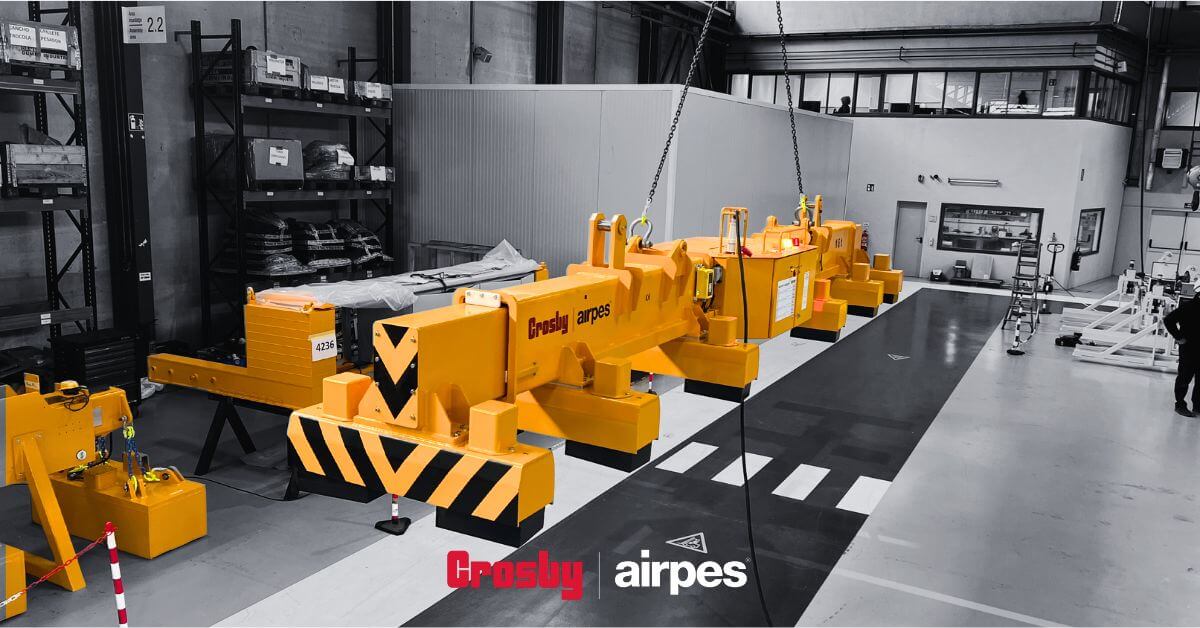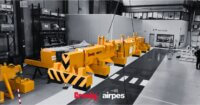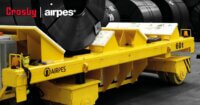
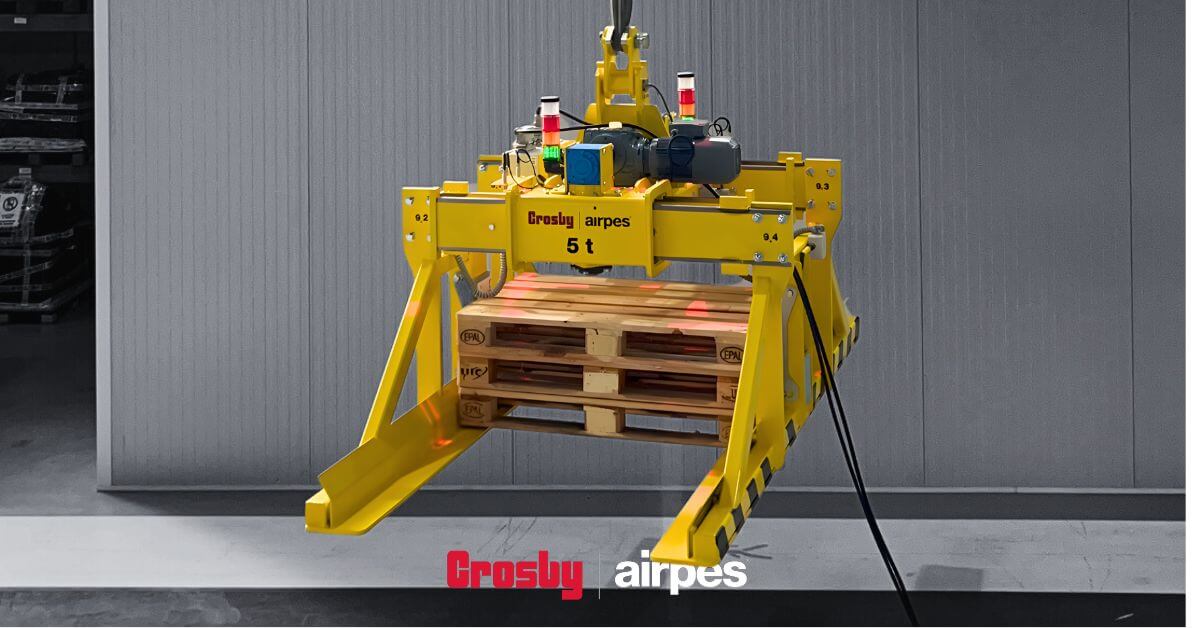
1-minute summary:A crane pallet lifter is a below-the-hook lifting device engineered to handle palletized loads suspended from an overhead or gantry crane, and when the operation involves non-standard weights, unstable loads, or demanding industrial environments, a custom-engineered solution becomes not just preferable, but necessary. We design and manufacture bespoke crane pallet lifters tailored to the exact requirements of each facility, combining structural precision with safety compliance to solve real handling challenges that off-the-shelf equipment simply cannot address.
What Is a Crane Pallet Lifter and When Do You Actually Need One?
Most people picture a forklift when they think about moving pallets. But in many industrial environments (warehouses with overhead crane infrastructure, production lines with confined floor access, or facilities handling loads that exceed standard fork capacity) getting a pallet from A to B safely requires a completely different approach.
A crane pallet lifter attaches below the hook of an overhead crane and grips, cradles, or clamps the pallet load, allowing it to be lifted and transported horizontally across the facility without any forklift involvement. The result: faster cycle times, reduced floor congestion, and significantly improved safety in high-throughput environments.
You genuinely need one when:
- Your facility already operates overhead or gantry cranes and you want to maximize that infrastructure investment
- Floor space is too tight or too obstructed for forklift maneuvering
- Load weights or dimensions fall outside the range of standard pallet handling equipment
- You’re moving fragile, unstable, or hazardous loads that demand controlled, predictable lifting paths
- Forklift access to the loading zone is structurally impossible
Maybe you’re also interested in: Types of Lifting Equipment: A Practical Guide
The Problem with Off-the-Shelf Pallet Lifting Equipment
Walk into any industrial equipment supplier and you’ll find a range of standard pallet lifters. Fixed geometries. Pre-set capacities. Generic attachment points. They work until they don’t…
The reality is that industrial operations are rarely standard. A pallet of cast iron molds weighing 2,400 kg behaves very differently from a pallet of shrink-wrapped electronics. A below-the-hook pallet lifter for a crane in a low-headroom mezzanine has completely different structural constraints than one operating in a 12-meter-clearance warehouse.
Standard catalog solutions force your operation to adapt to the equipment. Custom engineering inverts that relationship entirely.
And the consequences of getting this wrong aren’t just operational, they’re safety-critical. Dropped loads, tipping, structural failure under cyclic stress: these aren’t hypothetical risks. They’re documented incidents that happen when the wrong equipment is used in the wrong context.
You may be interest: 6 Overhead Crane Safety Tips to Protect Your Workers
How a Custom Below-the-Hook Crane Pallet Lifter Is Engineered
The engineering process behind a custom overhead crane pallet lifter isn’t a matter of resizing a template. It’s a structured technical process that begins with understanding the load; and ends with a device that performs reliably under real operating conditions, shift after shift.
Load Analysis and Structural Design
Every project starts with load characterization: total weight, center of gravity, load distribution across the pallet surface, dynamic forces during lift initiation and crane travel. This data informs the structural frame design (material selection, weld specifications, cross-section geometry) and determines the safety factors the final device must meet.
Finite element analysis (FEA) is typically used to validate the design under both static and dynamic conditions before a single piece of steel is cut.
Gripping Mechanism and Pallet Compatibility
This is where crane pallet lifter design gets genuinely complex. Pallets are not a uniform substrate. Euro pallets, industrial wooden pallets, plastic pallets, metal stillages… each has different structural properties, different entry points, and different failure modes under lateral or vertical load.
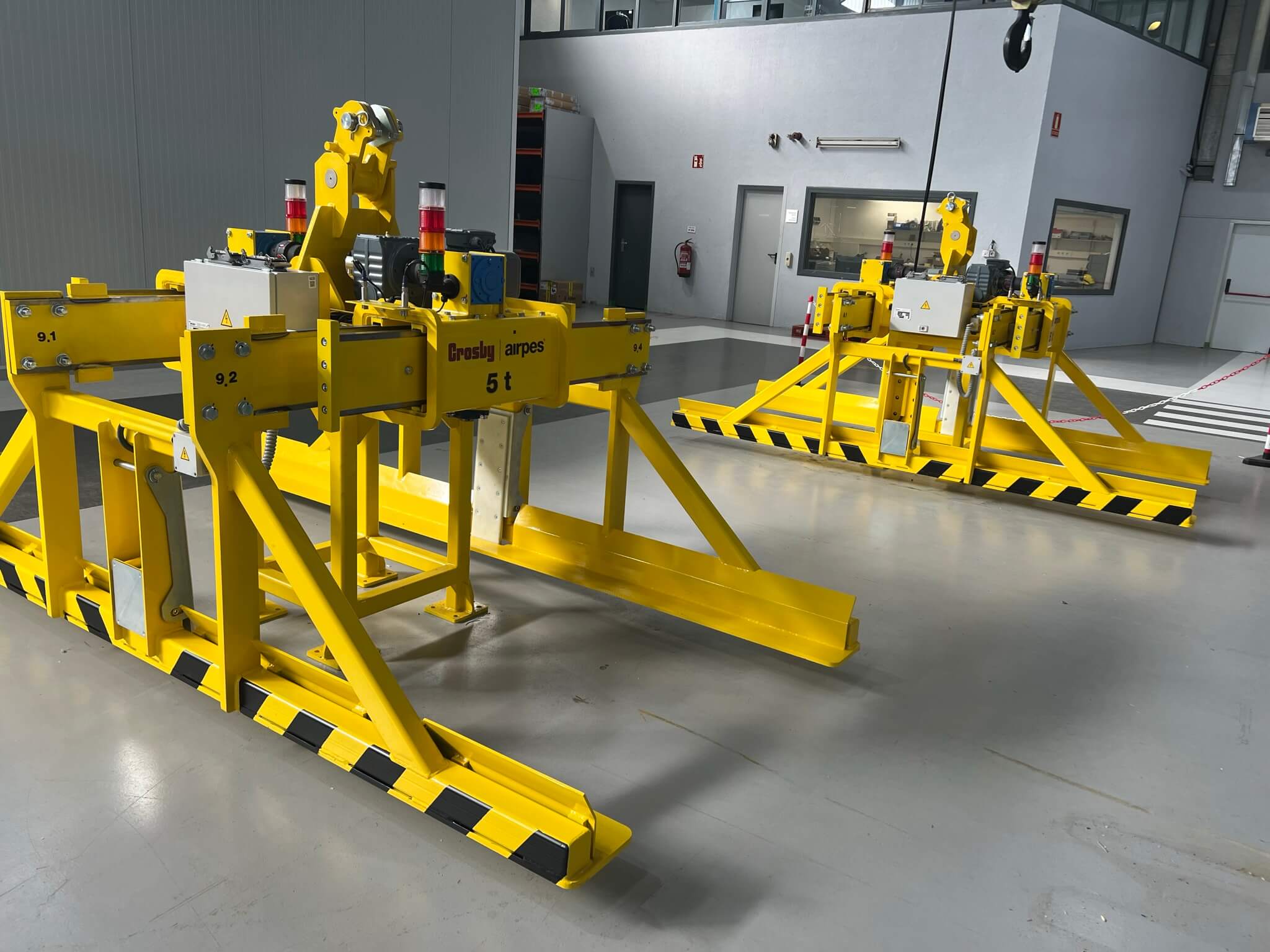
A well-engineered pallet lifter for cranes must account for this variability. Articulated arms, adjustable clamp width, self-centering mechanisms, anti-slip contact surfaces… the gripping system is typically the most mechanically refined component of the entire assembly.
Integration with Overhead Crane Systems
The lifter doesn’t work in isolation. It connects to a crane hook and that interface must be designed to handle the dynamic loading conditions of crane travel: acceleration, deceleration, pendulum swing, emergency stops. The attachment geometry, swivel capability, and safety latching all form part of the engineering scope.
Learn more about the broader range of solutions: Heavy Lifting & Handling Equipment
Crosby Airpes: Custom Lifting Engineering, Not a Product Catalog
There’s a reason we don’t lead with a product catalog. Our value isn’t in offering the most SKUs: it’s in offering the right solution for problems that standard equipment manufacturers have never had to solve.
We’re specialist in the design and manufacture of custom lifting and load handling equipment for demanding industrial environments. Every project is treated as an engineering problem first: the team analyzes the application, the environment, the crane system, and the operational requirements before proposing any technical solution.
What sets us apart in the crane pallet lifter space:
- Fully custom design: No adaptation of standard models; each device is engineered from scratch to match the specific load, crane, and facility
- In-house engineering capability: Structural calculation, FEA, and manufacturing under one roof, which means faster iteration and tighter quality control
- Proven track record in heavy and specialized lifting: The expertise applied to complex lifting spreaders and below-the-hook devices translates directly into more reliable, safer pallet lifting solutions
- Global project delivery: From initial consultation through manufacturing, testing, and on-site commissioning
- Full documentation and traceability: Every device leaves the facility with complete technical documentation, load test certificates, and maintenance records
The result is a crane pallet lifter that doesn’t just meet the minimum specification — it fits the operation it was built for.
Safety and Compliance: ISO Standards at the Core
In lifting equipment, compliance is the baseline. We design and manufacture all our equipment in accordance with internationally recognized management and safety standards.
Our solutions operate under ISO 9001, the international standard for quality management systems, which governs the consistency and reliability of every engineering and manufacturing process.
Occupational health and safety throughout the operation is managed in line with ISO 45001, ensuring that the people building your equipment work in a safe, controlled environment.
And environmental responsibility is addressed through ISO 14001 certification, which establishes systematic environmental management across all operations.
For customers in regulated industries (energy, automotive, aerospace, heavy manufacturing…) this certification framework isn’t just reassuring; it’s often a procurement requirement.
Is a Custom Crane Pallet Lifter Right for Your Operation?
Not every facility needs a bespoke solution. But if you recognize any of the following, it’s worth a conversation with an engineer rather than a browse through a standard catalog:
- Your loads vary significantly in weight, size, or stability
- You’ve had near-misses or incidents with existing pallet handling equipment
- Your overhead crane is underutilized because there’s no suitable below-the-hook tooling
- Standard solutions have been trialed and found inadequate
- You’re designing a new facility and want the handling system engineered in from the start
The cost of a custom overhead crane pallet lifter is almost always justified by the operational efficiency gains, the reduction in manual handling risk, and the extended service life of a device that was designed (not adapted) for the job.
Conclusion: The Right Pallet Lifter Is Engineered.
There’s a significant difference between buying a crane pallet lifter and having one built. One starts with a catalog, the other starts with your problem.
We exist for the second type: the one who has already realized that a standard solution won’t cut it, and who needs an engineering partner capable of turning a specific operational challenge into a precise, safe, certified lifting device.
If you’re handling palletized loads with an overhead crane (or you’re building an operation where that capability will be essential) the next step is a technical conversation.
The engineering team will assess your requirements and propose a solution built around your operation.